Making Time to Cry
“If you want something to cry about, I’ll give you something to cry about.”
Perhaps you, like me, heard that phrase growing up. Or other phrases like “don’t be a crybaby”, “you can’t cry about everything”, add your own emotional development-stunting words here. Crying is something I struggle to do. I don’t let myself cry about much, or anything at all, really. The last time I remember fully crying, it was beyond simple tears. My pregnancy of 13 weeks had ended; we had been treated without compassion by our local hospital staff, sent home without support to process anything that had happened, and I had to go back to work on Monday. It was all too much, and I couldn’t stop the sobbing and, sadly but understandably, head-banging that ensued. Come Monday, I was quiet and reserved, but that was the end of the external crying.
Flash forward eight years, and I just got an email from my second child’s Special Education Clerk informing me of Transfer of Rights because, not surprisingly, my kid is turning 18 in less than three months. I felt moisture in the corner of my eyes and a turning sensation in the pit of my stomach. The sensations are something new that I am learning, through therapy, to sit with because I have fought, and continue to fight, crying so much that it doesn’t ever manifest. As I sit typing, I wonder what it would feel like to truly have a deep, gut-wrenching cry that shakes my body and allows me to physically let go of all that I am holding on to. But that won’t happen right now. I have other obligations. A seven-year-old in a sparkly dress, foam crown, and frog earmuffs running on the treadmill while the five-year-old is on the daybed surrounded by colored pencils and paper, chatting merrily about who knows what to themself. When I go downstairs from this office space, I will be met with a hallway full of items that haven’t found their home, two bedrooms that house three children’s explosion of things, a kitchen that needs a very deep cleaning, a front room filled with boxes that signal a side hustle aimed at bringing in some much-needed funds, and baskets of clean laundry that needs to be processed. Not to mention the downstairs, which is full of dirty laundry that needs processing. All of this is on top of changes to our family’s finances that are outside of my direct control: lowered benefits, the BBB BS that now means higher education can not be fully funded by loans, and a myriad of other rising costs. Like everyone else, I have competing schedules and needs - my work schedule, my children’s schedules, my unpaid internship schedule, my school schedule; the list goes on - it feels like there aren’t enough Google calendars in the world to help me manage my life.
A good cry is what I need. What I lack is time. Along the road of my life, as I have discussed before, I learned to prioritize efficiency and production, putting others first and pushing my needs far down into a bottomless hole. This hasn’t been healthy for me. It has contributed to chronic pain, suicide attempts, and a profound lack of connection to others in the world. Crying helps us connect to others. We are hardwired to respond to the cry of an infant, of the injured. It is in our nature to live in community. Constantly holding it all together means people assume you can bear the weight of more; we have learned to accept what we see and not question what is unspoken. We have learned to be embarrassed about our vulnerabilities, our inadequacies, our moments of need, and so we don’t show them. These practices don’t benefit anyone. So I say, make time for a good cry - or, even better, let it come whatever time it likes. Invite the release of emotions in, hold space for it - for yourself and for others.
When Ten Minutes Changes Everything
There is so much more in the world than we can ever imagine.
When I started Postcrossing, I assumed I would simply be sending my art out into the world as a way to connect with others. Last week, after noticing nothing was happening on my account, I checked the forums and discovered a local meetup.
Part of my ongoing self-care is finding new ways to connect outside of my home. That isn't always easy with a family of five, each with their own unique needs. But this meetup was on a Friday evening, at a comfortable time, in a local coffee shop. Even so, I felt that familiar flutter of anxiety at the thought of walking into a room full of strangers.
Instead of trying to make the feeling disappear, I gave myself permission to be nervous while also creating a plan that would help me feel safe.
Ten minutes.
I would order a tea, sit down, wait for my drink, maybe talk with people, and if the discomfort became too much, I could quietly leave. Giving myself an "exit plan" made it easier to say yes.
What I found was surprising.
There were people just like me—new to Postcrossing, attending their very first meetup. Before long, I found myself talking about art, travel, books, creativity, and interests I had almost forgotten I still carried with me. It was a reminder that parts of ourselves don't disappear; sometimes they simply wait for the right environment to come back to life.
This experience also reminded me of research discussed in the November 2023 issue of Psychology Today, which explored the surprising power of our social circles. While most of us only need a handful of deep, emotionally close relationships to meet our attachment and support needs, our "weak ties"—the barista who knows our order, a librarian, neighbors, classmates, coworkers, or someone we chat with at yoga or a community gathering—can be equally important for our well-being. These brief, everyday connections expand our sense of belonging, introduce us to new ideas, and remind us that we are part of something larger than ourselves.
Sometimes self-care isn't about doing more yoga, reading another book, or finding the perfect morning routine. Sometimes it's simply saying yes to ten minutes of discomfort in exchange for the possibility of connection.
Those ten minutes didn't just introduce me to Postcrossing friends. They reminded me that community often begins with the smallest act of courage: walking through the door.
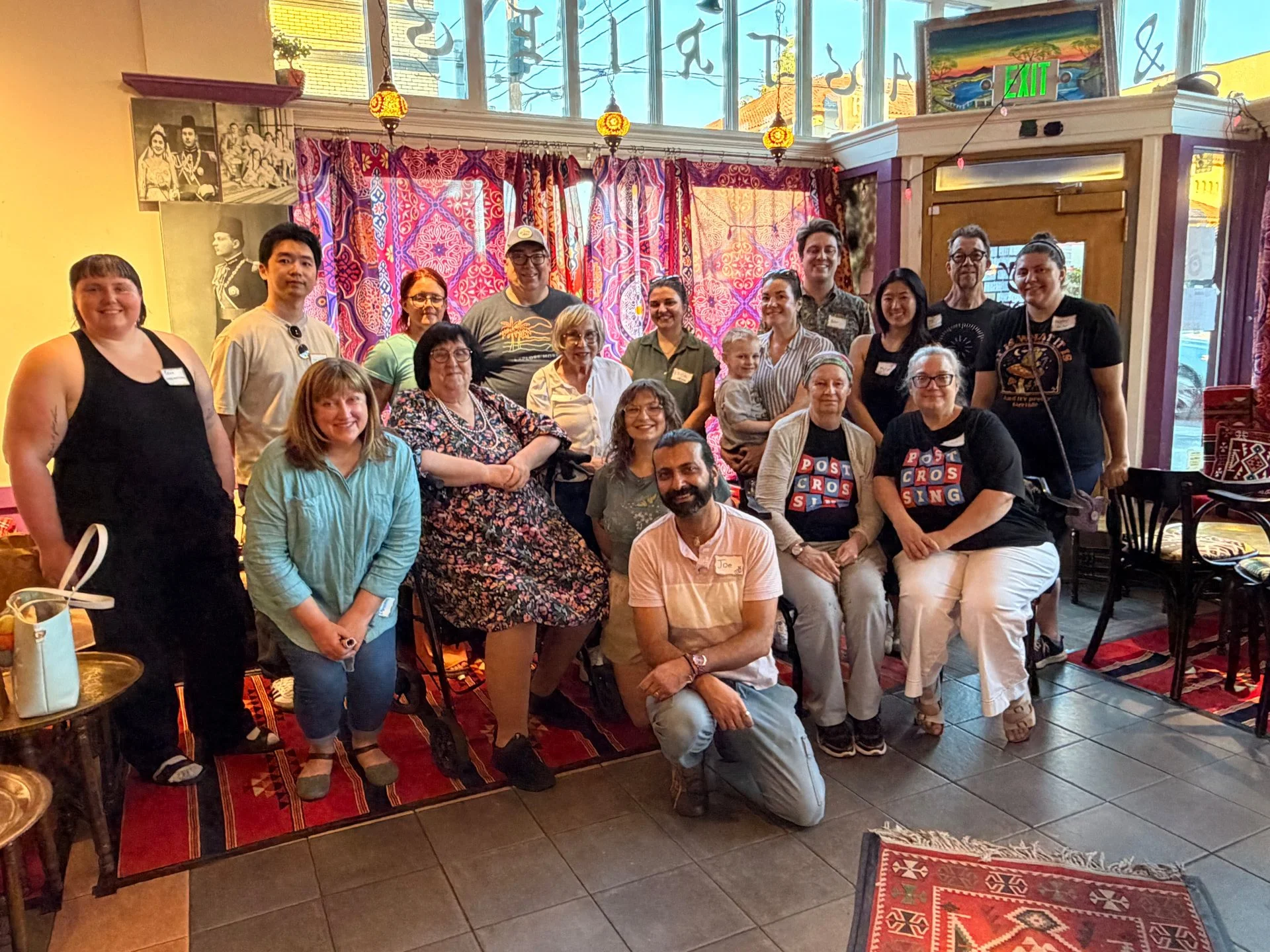
PostCrossing Meetup at TOV Coffee on Hawthorne in Portland Oregon 7/31/2026
Alternative Self Care Options: Creating Connections
My therapist asks me weekly, “What are you doing for self-care?” It’s never an easy question to answer. If she had asked me in my twenties, as a new mom, my answer would have been, “Taking a walk to the grocery store, talking to the clerk for my sanity, and using moisturizer, if I could remember, daily.”
Somewhere along the way, as my family grew and my business expanded, I began tying self-care to success. If I taught more yoga classes, well, I was more successful in business and, of course, was engaging in more yoga, so the self-care took care of itself—or so I thought. But working—even at something you love—is not the same as self-care.
As life around me grew, my internal life seemed to shrink. Fewer things were simply for me. Fewer things were creative. I dug out an old costume box and found a belly dance top I had sewn during a workshop I once hosted. That sparkly velveteen piece shook me. I no longer belly danced for myself. I no longer crafted things of beauty simply for the joy of creating them. Somewhere along the way, creativity became something I offered other people instead of something I experienced myself.
I have surrounded myself with enough art supplies to open a store; clearly, I have a desire to create. My struggle has never been with wanting to create, but with deciding what to create and what to do with it afterward. Looking back, I can see how old beliefs about productivity and worth quietly found their way into my creative life. Add a season of downsizing and trying to live more simply, and even choosing what to make began to feel surprisingly complicated.
I had been dabbling in painting—watercolor and acrylics through park district classes—when an Instagram post about creating postcards for Postcrossing appeared in my feed. It felt like fortune was smiling upon me. Creating artwork that I could then send away. Artwork that didn't need to become a business. It didn't need to earn money. It didn't even need to stay in my house. It simply needed to brighten someone else's mailbox.
These were the seeds of self-care.
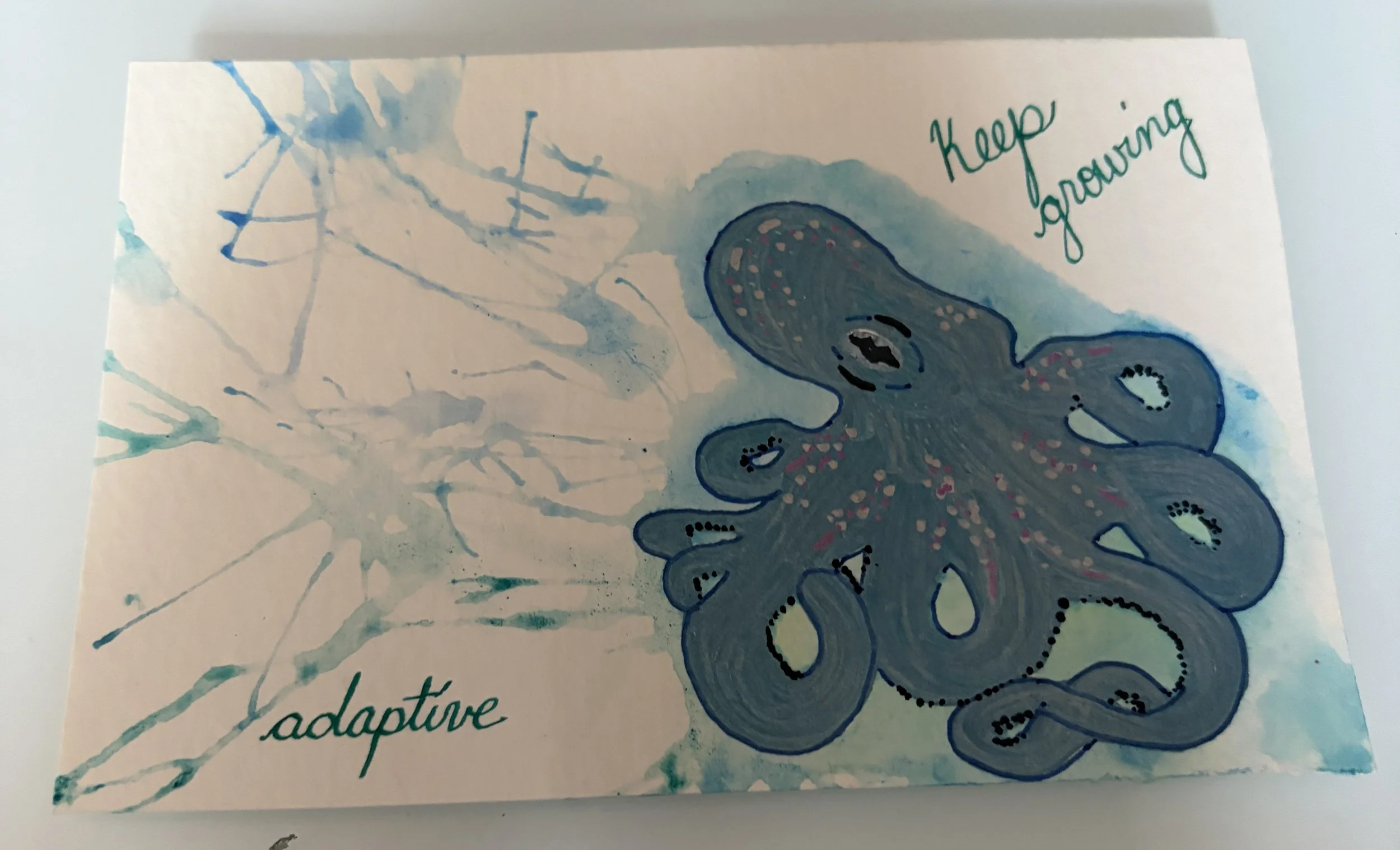
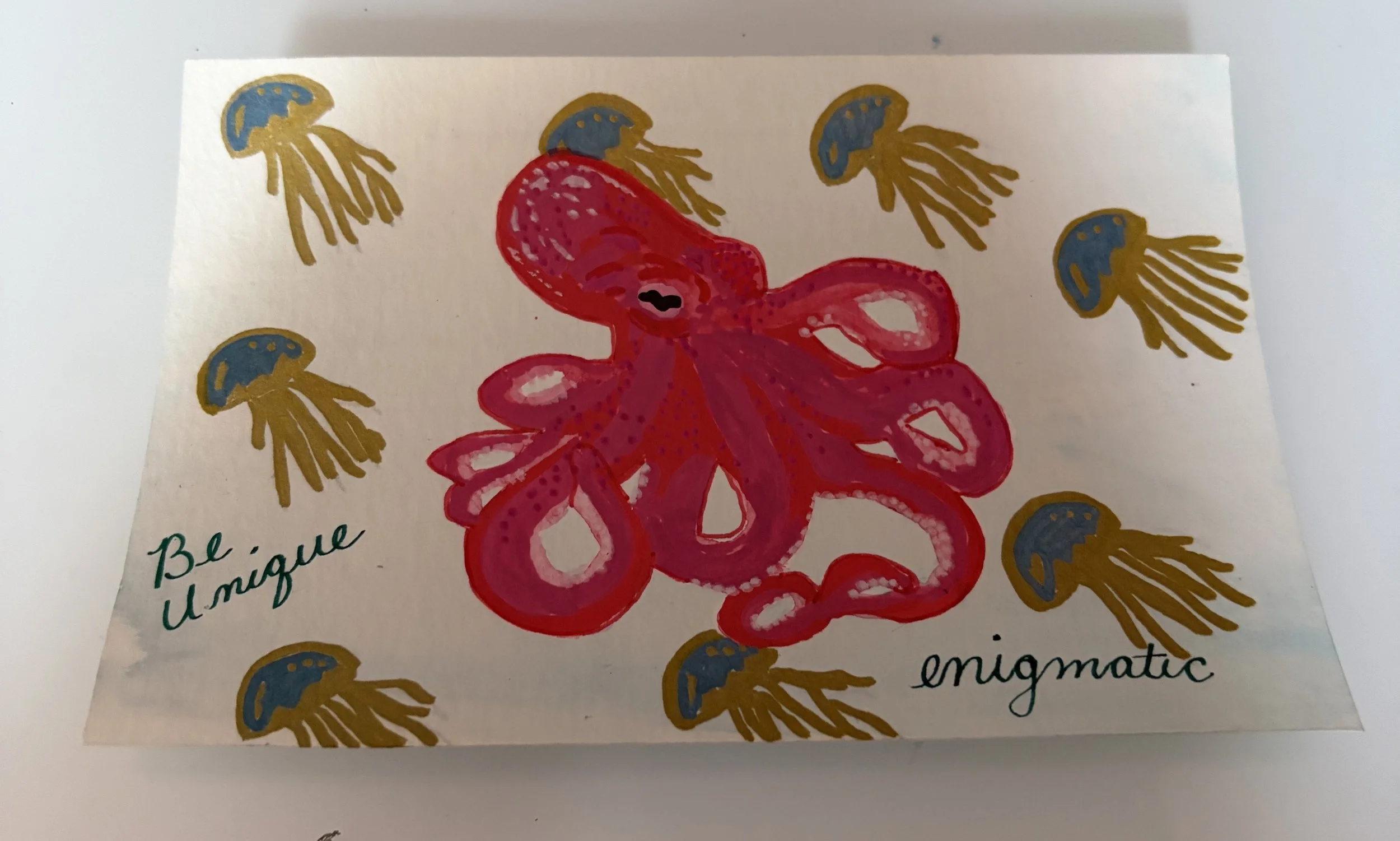
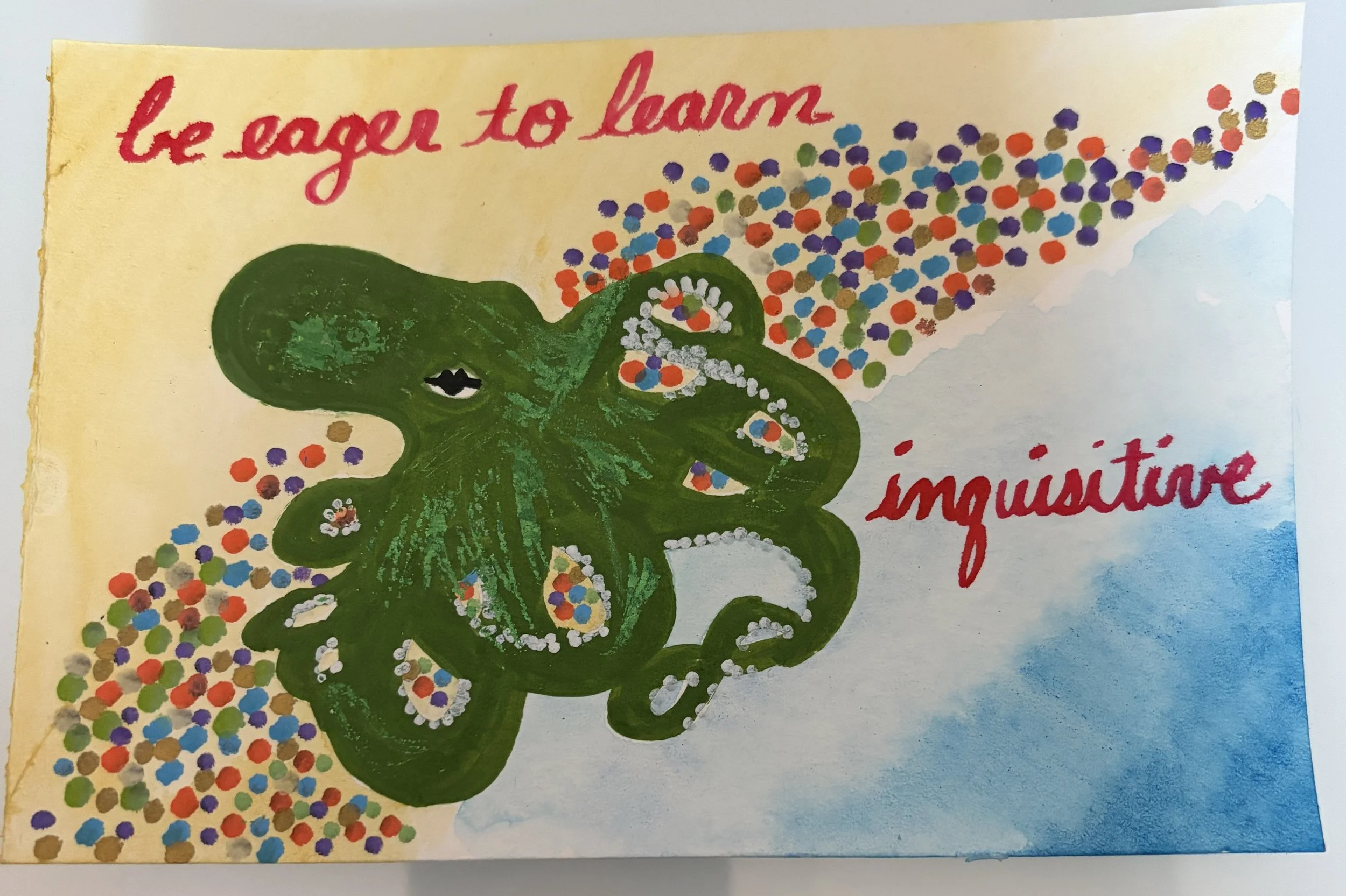
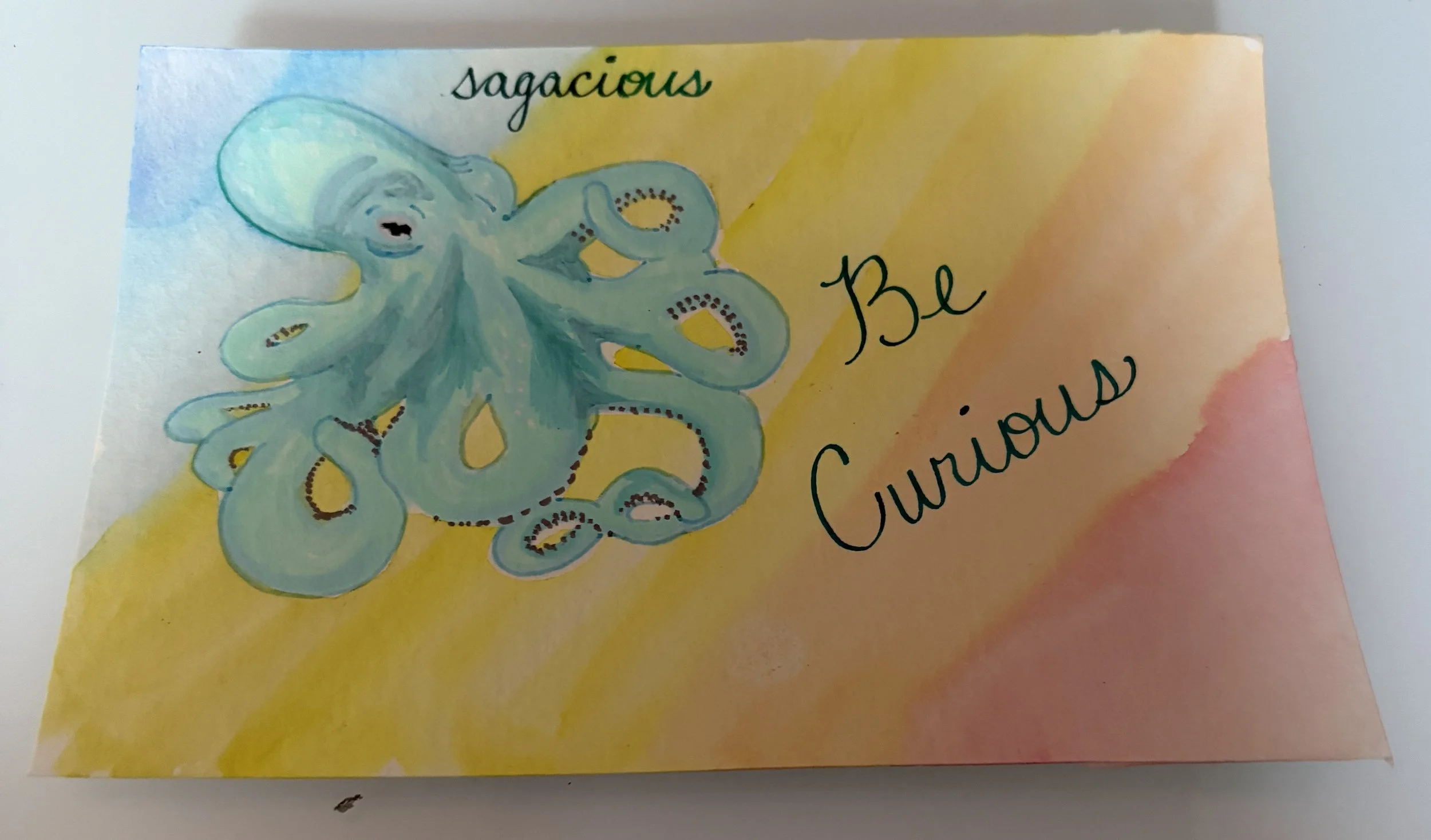
Thirty minutes a day, in my office. No siblings shrieking at each other. No answering my partner's questions about where things are. Just quiet time to create, and then connect with someone else somewhere in the world.
The first postcards I created were part of my Postcrossing’s “Mollusks Through the Mail” themed exchange—a perfect excuse to combine watercolor practice, creativity, and connection.
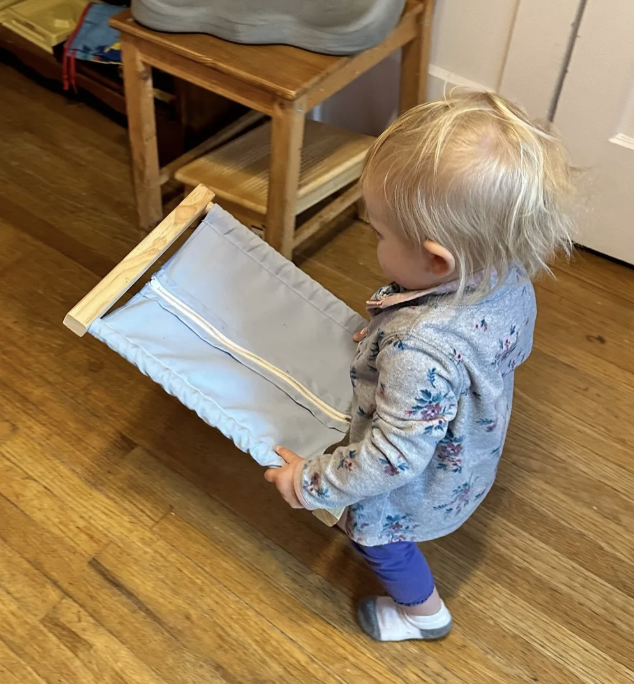
Building Emotional Resilience: Helping Children Develop the Skills to Thrive
Children aren’t born knowing how to walk or talk. These are skills that are learned through practice.
Children aren’t born knowing how to walk or talk. These are skills that are learned through practice. A child learns to scoot, crawl, cruise, and then walk—but only if given the opportunity to move. Children learn to speak in the same way, by being surrounded by language-rich environments that involve serve-and-respond conversations with their utterances, as early as first grunts and tones. Emotional resilience is no different. Children aren’t born with emotional resilience; it is a skill that must be nurtured and learned.
Just like physical and language development, emotional development requires guidance, support, and opportunities to practice. When children experience a range of emotions and are supported in navigating them, they develop the tools to manage their feelings effectively. This includes understanding and labeling their emotions, expressing them appropriately, and finding healthy coping strategies.
Emotional Resilience and Academic Success
Emotional resilience becomes even more important when children move beyond learning the ABCs and simple math facts. Even children who demonstrate early aptitude will reach a point where they must put forth effort to learn and grow. Being able to persevere through challenges, stay motivated, and bounce back from setbacks is essential for academic success.
How to Nurture Emotional Resilience
Validate their feelings: Let your child know that their emotions are valid and that it’s okay to feel them.
Name their emotions: Help them identify and label their emotions, such as “sadness,” “anger,” or “joy.”
Teach healthy coping strategies: Help them develop tools to manage their emotions, such as deep breathing, mindfulness, or physical activity.
Model healthy emotional regulation: Show your child how to manage your own emotions in a healthy way.
Create a safe and supportive environment: Provide a space where your child feels safe to express themselves and make mistakes.
By building emotional resilience early on, you’re setting your child up for success in school and beyond.
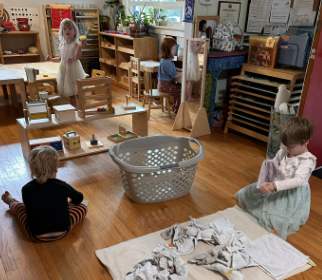
Supporting the Whole Child: Play Therapy, Emotional Wellness, and Family Health
At its core, family wellness is not about perfection. It is about creating environments where emotional health is supported, nervous systems are cared for, relationships are nurtured, and both children and adults are given tools to thrive.
We have long been believers in whole human health. For over a decade we owned a fitness studio in the Chicagoland area, and the central focus of our programming was never the pursuit of a “perfect body,” but rather mental and emotional wellness through movement, mindfulness, meditation, and community connection. Over the years I presented to social workers, educators, healthcare professionals, and parent groups on the relationship between physical activity, nervous system regulation, and overall family wellness.
Those experiences continue to shape the way we approach wellness today.
However, mindfulness practices, movement, and supportive home environments are not substitutes for qualified mental health care when it is needed. That’s why our family has always viewed therapy as an important and healthy part of caring for children and ourselves. Parents should no more hesitate to support a child’s mental health than they would seek care for a broken bone, asthma, or vision concerns. Emotional wellness is health care.
One therapeutic approach that is often misunderstood is play therapy. Many people assume it is simply “playing with toys,” but play therapy is a structured, evidence-informed approach that uses a child’s natural language — play — to help them process emotions, develop coping skills, and work through difficult experiences.
Here’s a deeper look at what play therapy can support:
Symbolic Communication
Children often struggle to express complex emotions verbally, especially when dealing with anxiety, stress, grief, transitions, or traumatic experiences. Through play, children communicate symbolically. A dollhouse, toy animals, art materials, or imaginative stories may become safe ways for a child to express feelings they cannot yet explain with words.
Relationship Building
The therapeutic relationship itself is an important part of healing. A trained therapist provides a consistent, safe, and supportive environment where children can build trust, feel emotionally secure, and explore difficult feelings without fear of judgment.
Emotional Processing
Play therapy creates space for children to process emotions in developmentally appropriate ways. Through play, movement, creativity, and storytelling, children can work through fears, worries, anger, sadness, and stress while building emotional resilience.
Coping Skills Development
Children can also develop healthy coping strategies through therapy. Therapists may help children learn calming techniques, emotional regulation skills, mindfulness practices, sensory supports, or ways to safely express frustration and anxiety.
Self-Discovery and Confidence
Play therapy can support a child’s growing understanding of themselves, their strengths, and their emotions. As children gain confidence in expressing themselves and navigating challenges, their sense of competence and self-worth often grows as well.
The Importance of Parent Involvement
While play therapy centers on the child’s relationship with the therapist, parent involvement is often an important part of the process. Parents provide valuable insight into their child’s experiences, behavior, stressors, and developmental needs. Therapy can also help caregivers better understand emotional regulation, attachment, communication, and supportive parenting strategies that strengthen connection within the family.
At its core, family wellness is not about perfection. It is about creating environments where emotional health is supported, nervous systems are cared for, relationships are nurtured, and both children and adults are given tools to thrive.
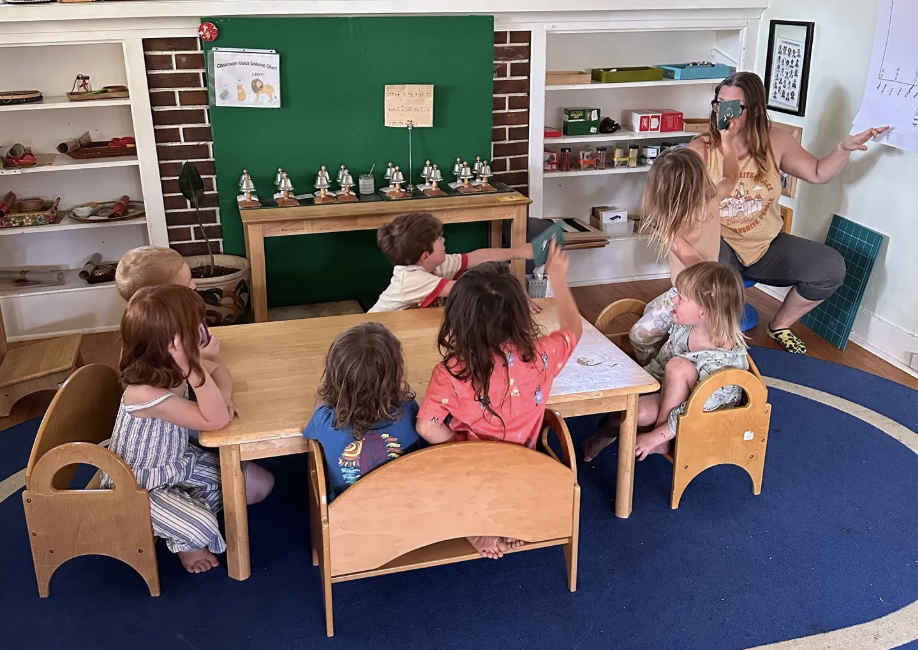
The Silent Method
The silent method is most effective when used in situations where the child is seeking attention through their behavior.
The silent method of positive discipline, also known as planned ignoring, is a technique used in parenting or teaching to address unwanted behaviors without resorting to punishment or harsh words. It involves deliberately ignoring a child’s negative behavior, assuming that the behavior will eventually decrease due to lack of attention.
How does it work?
When a child exhibits an unwanted behavior, the parent or teacher calmly and consistently ignores it. This means not giving the child any attention, whether it’s positive or negative. The goal is to make the behavior “boring” for the child, so they eventually stop doing it.
When is it effective?
The silent method is most effective when used in situations where the child is seeking attention through their behavior. It can be particularly helpful for dealing with minor annoyances, such as whining, tantrums, or attention-seeking behaviors.
Important considerations:
Consistency is key: It’s crucial to be consistent in applying the silent method. Any inconsistency can confuse the child and make the technique less effective.
Age-appropriate: The silent method may not be suitable for very young children, who may not understand the consequences of their behavior.
Consider the context: The effectiveness of the silent method may vary depending on the specific situation and the child’s personality.
Alternatives to the silent method:Positive reinforcement: Rewarding desired behaviors can encourage positive behavior.
Natural consequences: Allowing children to experience the natural consequences of their actions can help them learn from their mistakes.
Remember, the goal of positive discipline is to teach children appropriate behavior in a respectful and supportive way. By using techniques like the silent method, you can help your child develop positive behaviors and build a strong relationship.

Parenting: A Never-Ending Journey of Adaptation
Remember, there’s no one-size-fits-all parenting manual. What works for one family might not work for another.
Parenting is an ongoing effort, a true labor of love but let’s be honest, it’s also one of the most challenging things to do. The constant evolution of our children means that our parenting strategies need to evolve too. If family social theory, parenting styles, family systems theories or even Montessori philosophy were the magic pill we would all be swallowing them daily. Sadly, they are not. What works one day may not work the next, what works with one child may not work with a sibling, and don’t forget co-regulation theory!
It’s easy to fall into a parenting routine or parenting style trap. What worked at an early stage may not be effective later on, or a philosophy of parenting may not work at all. This is where self-assessment becomes crucial. Are your strategies working? Is your child responding positively? Are your own needs being met? Is your family functioning in a positive way?
Sometimes, the answer to these questions might be a resounding “no.” This is when radical change may be necessary. It can be scary to step outside of your comfort zone and try new approaches, but it’s often essential for continued growth and harmony in your family.
Remember, there’s no one-size-fits-all parenting manual. What works for one family might not work for another. The key is to be open-minded, flexible, and willing to adapt. It’s okay to make mistakes; it’s how we learn and grow.
Here are a few tips for self-assessment:
Reflect on your own emotions: Are you feeling stressed, overwhelmed, or resentful? These emotions might indicate a need for change.
Seek outside perspectives: Talk to other parents, friends, or professionals for fresh insights.
Don’t be afraid to experiment: Try new approaches, even if they seem unconventional.
Celebrate small wins: Acknowledge your successes and build on them.
Regularly check in with your child: Talk to them about how they feel, how you feel, what’s working for them and what you are all struggling with (when a child is the appropriate age to engage with these concepts- discussions can be very fruitful and positive).
Parenting is a marathon, not a sprint. By embracing the challenges and adapting our strategies, we can create a fulfilling and supportive environment for our children.

Returning to Routine: Supporting Children Through Transitions, Independence, and Growth
Going back to school after a vacation can be difficult for many children, and parents looking to lessen the pushback…
Going back to school after a vacation can be difficult for many children, and parents looking to lessen the pushback can take simple steps to support independence, emotional regulation, and healthy family rhythms during transitions.
Children thrive with structure, predictability, and connection. School breaks often bring excitement, novelty, relaxed schedules, extra screen time, travel, later bedtimes, and more flexibility within the home. While these moments can be joyful and restorative, returning to routines afterward can feel abrupt for young children who are still developing emotional regulation, flexibility, and impulse control.
Many adults would love to remain on vacation indefinitely — warm weather, adventure, freedom from responsibilities — but adults understand the practical realities that eventually pull us back into routine. Young children live much more fully in the present moment. They do not yet possess the same ability to anticipate long-term consequences, regulate disappointment, or emotionally prepare for transitions. Because of this, returning to school or childcare after a break can sometimes lead to whining, tears, clinginess, irritability, or behaviors parents thought their child had already outgrown.
These moments are not signs of failure. They are opportunities to gently guide children back toward stability and confidence.
Nurturing Independence Through Communication
One of the healthiest ways to support children is by encouraging them to express their needs clearly and respectfully. Young children naturally communicate through emotions before they develop language and self-regulation skills, but as they grow, adults can help them transition from crying, grabbing, whining, or demanding toward using words to express needs and feelings.
Consistency matters. When the adults in a child’s life calmly encourage verbal communication, children slowly develop confidence in their ability to advocate for themselves. Over time, this reduces frustration for both children and caregivers while strengthening connection and trust.
Children who feel heard are often more cooperative because they no longer need to rely solely on emotional escalation to communicate discomfort, uncertainty, or needs.
Habits Shape Family Culture
Children learn patterns quickly. When certain behaviors consistently produce desired results, those patterns naturally strengthen over time. This is not manipulation in the way adults think of it; it is simply how children learn about relationships, boundaries, and the world around them.
A child who discovers that calm communication is effective will slowly rely on it more often. A child who experiences predictable routines and steady expectations begins to feel emotionally safer because the environment feels understandable.
Family wellness is not built through perfection. It is built through consistency, connection, repair, and repetition.
Supporting Independence in Daily Life
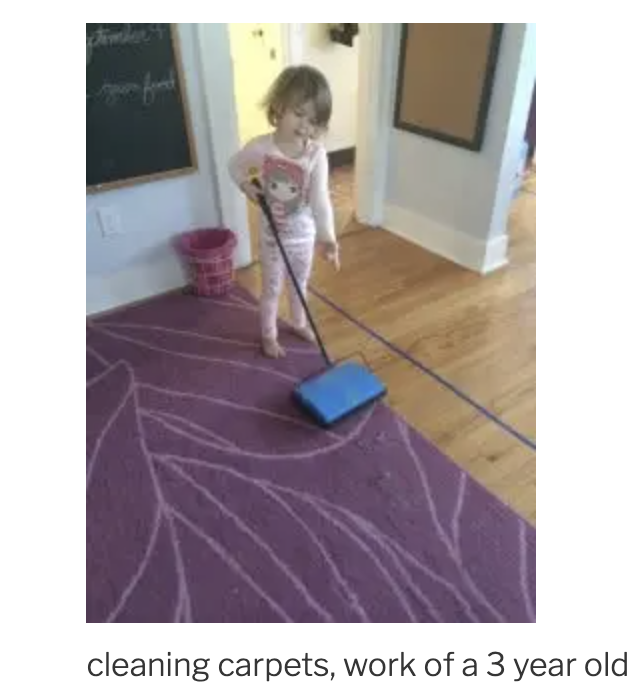
One of the greatest gifts adults can give children is the opportunity to participate meaningfully in their own lives.
Young children are often capable of far more than adults realize when given time, patience, and trust. Allowing children to pour water, choose clothing, help clean up, carry belongings, prepare snacks, or participate in household routines helps build competence, resilience, and self-esteem.
These small moments matter deeply.
When adults constantly rush in to complete tasks for children, the unintentional message can become: You are not capable without me. But when children are allowed to try — even imperfectly — they begin developing confidence in themselves.
A child who puts their shoes on the wrong feet but beams with pride is learning something far more important than perfect shoe placement. They are learning persistence, problem solving, body awareness, and self-trust.
Children learn by doing. Growth requires effort, frustration, mistakes, repetition, and patience. While it can feel uncomfortable for adults to watch children struggle through tasks that could be completed more quickly by grown hands, those moments are often where the deepest learning occurs.
Building Confidence Without Perfection
Many adults unintentionally tie success to performance, speed, or outward appearance. Children, however, benefit most when they feel safe to learn gradually.
Confidence develops when children experience:
opportunities to try,
room to make mistakes,
support without rescue,
and encouragement without pressure.
Family wellness often grows when homes become places where children are allowed to practice being human instead of being expected to perform perfectly.
Boundaries Create Emotional Safety
Patience and independence do not mean the absence of boundaries. In fact, children feel safest when loving limits are clear and consistent.
Healthy boundaries help children develop self-control, emotional resilience, and responsibility. Calm follow-through matters far more than punishment, threats, bribery, or power struggles.
For example, if cleanup is an expectation within the home, adults can remain calm and steady:
“We clean up after ourselves.”
“Would you like to start with the plate or the napkin?”
“I’ll stay with you while you finish.”
Simple choices preserve connection while still upholding expectations.
Children develop self-regulation slowly through repetition, modeling, and supportive guidance. The goal is not obedience through fear, but internal responsibility built through practice and relationship.
Returning to Routine With Compassion
Transitions are hard for many children — and adults too. Returning to school, work, schedules, and responsibilities after periods of freedom can feel emotionally jarring.
A smoother transition often begins with:
consistent sleep schedules,
predictable meals,
slower mornings,
reduced overstimulation,
clear expectations,
emotional connection,
and patience for big feelings.
Children do not need perfection from adults. They need steadiness, empathy, and opportunities to grow.
Sometimes the most supportive thing we can do is slow down, remain calm, and trust children enough to let them practice becoming capable.
Quick Tips for Supporting Independence at Home
Let children try before stepping in.
Maintain calm, consistent boundaries.
Offer simple choices whenever possible.
Build predictable routines.
Allow extra time for children to practice skills independently.
Resist correcting every imperfection.
Focus on connection before compliance.
Practice patience — growth takes time.
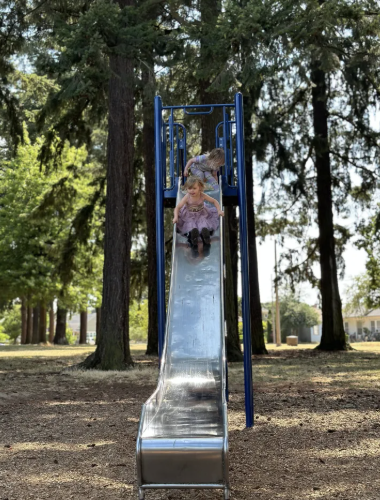
Early Independence: The Building Blocks of Successful Adults
Childhood Experiences Shape Our Future
The seeds of independence are often sown in early childhood. The experiences a child has in their formative years can profoundly impact their ability to function autonomously as teenagers and adults. It’s a concept that might seem intuitive, but the implications are far-reaching.
The Importance of Early Independence
Developing Problem-Solving Skills: When children are given age-appropriate challenges and responsibilities, they learn to think critically and find solutions. This skill set becomes invaluable as they navigate the complexities of adolescence and adulthood.
Building Self-Esteem: Children who are encouraged to explore their world and make choices (within safe limits) develop a strong sense of self-worth. This confidence carries over into their later years, enabling them to take risks and pursue their goals.
Fostering Resilience: Early independence helps children develop resilience, the ability to bounce back from setbacks. When they learn to overcome challenges independently, they build a strong foundation for handling life’s inevitable ups and downs.
Creating a Strong Sense of Responsibility: Children who have chores and responsibilities learn the importance of contributing to their family and community. This sense of duty continues into adulthood, leading to responsible and engaged citizens.
The Link Between Early Independence and Teen Success.
Teens who have experienced a healthy dose of independence as children tend to:
Make Better Decisions: They have had more opportunities to practice decision-making and learn from their mistakes.
Be More Self-Reliant: They are less likely to rely on others for everything and are better equipped to handle challenges independently.
Have Stronger Relationships: Their ability to communicate effectively and cooperate with others is enhanced.
Be More Academically Successful: Independent learners are often more motivated and engaged in their studies.
The Impact on Adulthood
The benefits of early independence extend well into adulthood. Adults who were raised with a sense of autonomy are more likely to:Achieve Career Success: They are often more confident, resilient, and self-motivated, qualities that are essential in the workplace.
Build Strong Relationships: Their ability to communicate and cooperate with others is a cornerstone of healthy relationships.
Be More Satisfied with Life: A strong sense of independence and self-reliance contributes to overall life satisfaction.
By nurturing independence from a young age, we are investing in our children’s future success. It’s a gift that keeps on giving.
Keywords: early childhood, independence, child development, parenting, teen success, adulthood
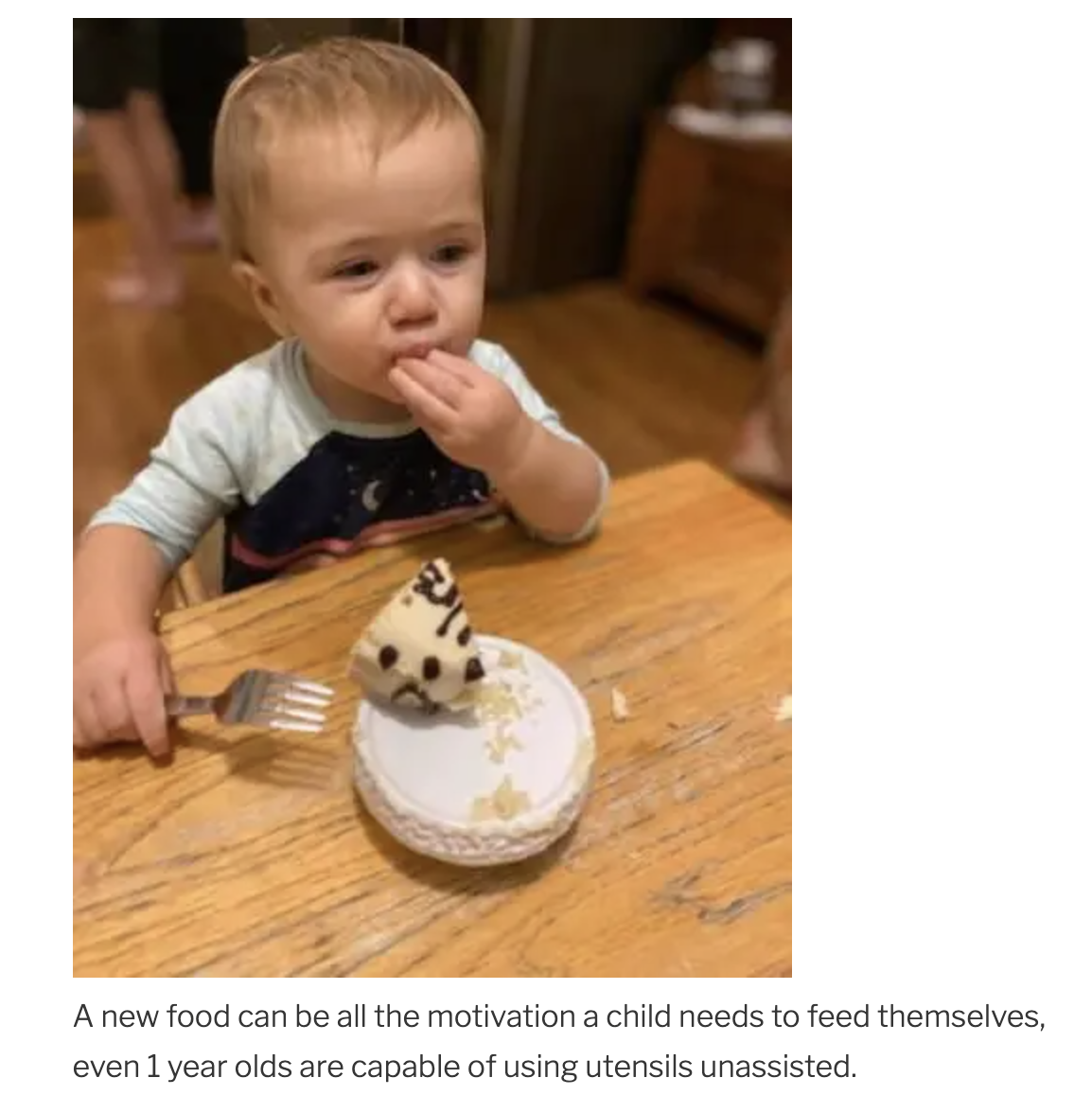
We are Raising our Children for the Rest of the World
Over the years I have become a very vocal advocate for the independence of children. I believe, within reason…
Over the years I have become a very vocal advocate for the independence of children. I believe, within reason, they should be allowed independence to care for themselves (feeding, dressing, cleaning), their environment and others. This is not to say that they have the life experience or abstract reasoning to tackle every single issue that arises; crossing the street is something that needs to be taught and can’t be learned by mere trial and error. There are, though, other instances in life where
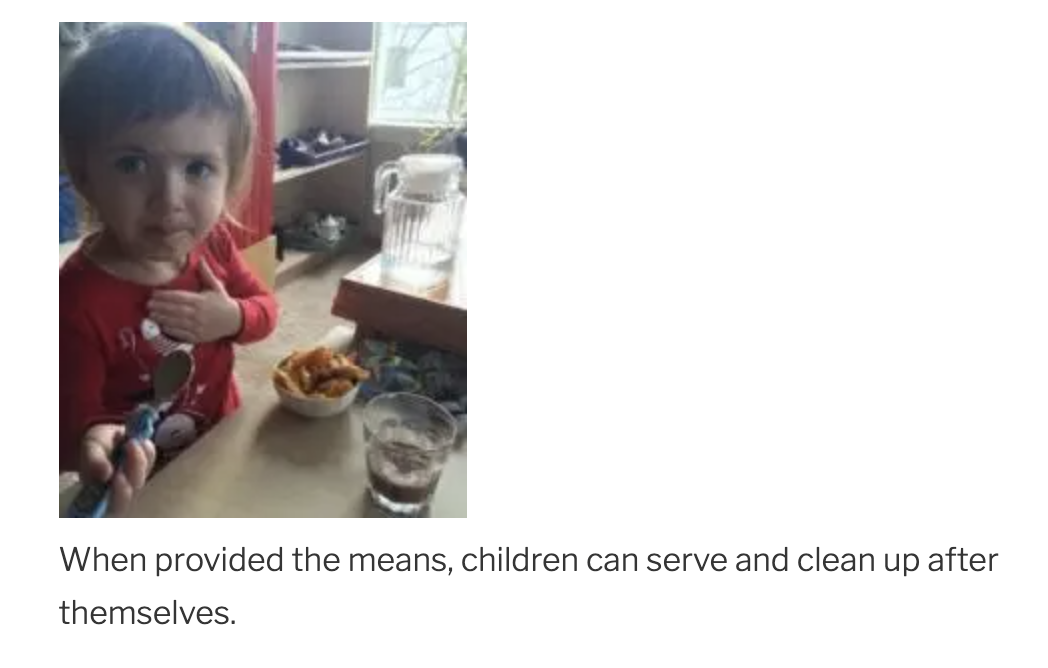
I have been a teacher in one form or another for more than half of my life, and now prefer the title that Montessorians use, guide (Montessorians also use directress). To quibble over words and titles may seem trivial, but at their core, these words are different. A teacher is one who teaches — meaning the action comes from the individual as they impart knowledge to another. This makes the recipient passive as they are the one being taught and creates a debt owed. Connotatively, it may bring up images of school children sitting sedately behind desks as a larger figure looms at the front of the room, scrawling on a chalkboard or lecturing. A directress, on the other hand, is one in charge of directing an organization; in this case, the organization can be seen as the classroom environment. A director/ess can be thought of as a person who governs the overall flow that a group experiences. The late Latin origin of the word can also be “to guide.” Which brings me to my preferred term, guide.
An adult in a Montessori classroom is a guide, a person who leads others to and through unknown travels, towards wisdom and knowledge, but does not experience this knowledge for them, does not require or allow the participant to take a passive role in this adventure. A guide encourages and invites exploration during a shared adventure, imparts their own learned wisdom and hopes that the participant can create meaning from it through their own experiences. “If education is always to be conceived along the same antiquated lines of a mere transmission of knowledge, there is little to be hoped from it in the bettering of man’s future. (Montessori, The Absorbent Mind, The Child’s Part in World Reconstruction, p. 4)
Experiences are an important and huge part of development and winning independence for human beings. I speak daily about allowing children to do for themselves so that they can know themselves as capable, can build self-esteem and self-worth. “If teaching is to be effective with young children, it must assist them to advance on the way to independence. We must help them to learn how to walk without assistance, to run, to go up and down stairs, to pick up fallen objects, to dress and undress, to wash themselves, to express their needs in a way that is clearly understood, and to attempt to satisfy their desires through their own efforts”. (Montessori, The Discovery of the Child)
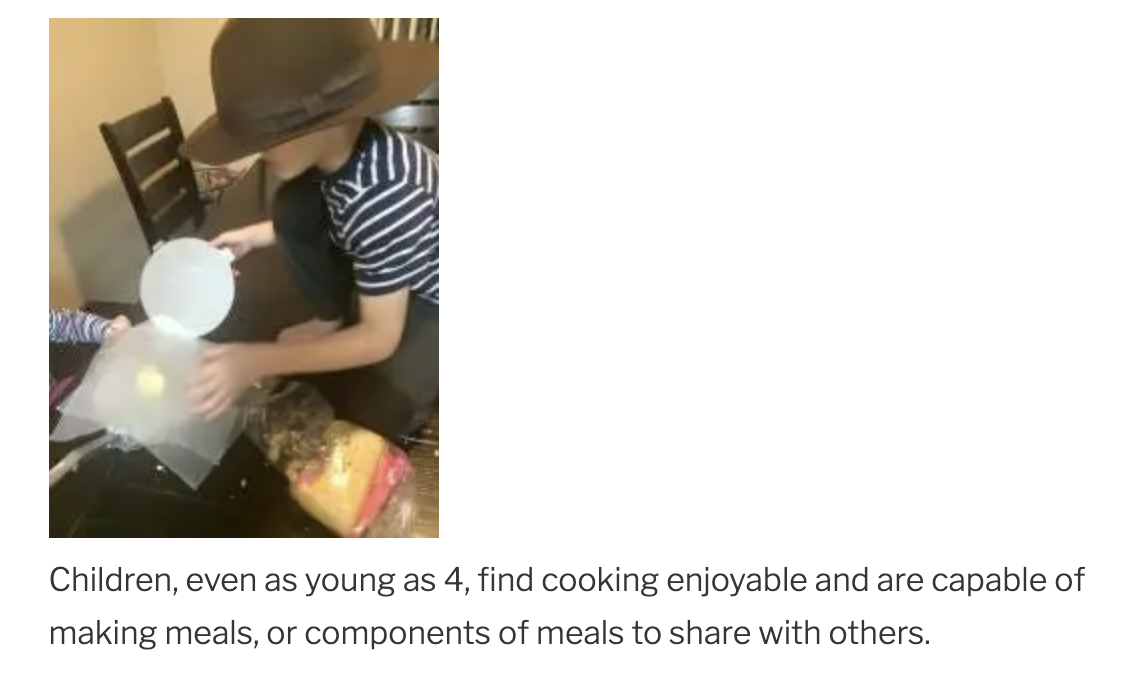
There is no way to force a child to learn to walk. Think about that for a moment. I have been a witness to three of my own children walking and they did it all on their own, those first steps were theirs to take, not mine. I didn’t hold their hands and attempt to force them into movements they weren’t ready to achieve because walking comes from a desire to expand movements, a readiness of muscles and the individual’s own efforts. I was excited, nervous and proud for them with an understanding that they owed me nothing, this milestone was theirs to accomplish. “For such a delicate mission great art is required to suggest the right moment and to limit intervention, last one should disturb or lead astray rather than help the soul which is coming to life and which will live by virtue of its own efforts.” (Montessori, The Discovery of the Child p141)
Walking isn’t the point of this post though, dependent adults are what I hope to discuss with parents and future parents. Montessorians like to discuss “adult dependency” a great deal in relation to children’s dependence on adults. I want to view this phrase as a misconception. Humans are hard wired for survival, and for growth so adult dependency does not make much sense for a neurotypical child. Where does this idea that they must be dependent come from? I think it is important to point out that there is a difference between children who seem unmotivated to work at difficult tasks because they fear failure and those who have dependent adults in their lives. The former prefer to say they can’t do things or things are not working when an activity gets difficult, they consistently ask for help or assistance over attempting to try for themselves and in general have no intrinsic motivation towards self-perfection. Many articles have been written about parenting styles, or more importantly adults’ use of praise and how it demotivates children, creates a stress cycle or shame over failure dynamic that makes a child retreat from challenges.
In Montessori we have a friendliness with error philosophy and don’t congratulate children on their accomplishments or deride them on their failures. This first group of children seem trapped, they want to be independent but they fear failure or disappointing their adults. Their validation has come from an external source, sometimes so frequently that the child may question if anything is truly a good job. They depend on validation that may not come if they are unable to be successful so they simply do not try. For these children we often suggest their adults focus on the process, not the product eg: “I see you worked for a long time to put on your shirt” or focus on the child’s own validation, “It feels good to take care of yourself, doesn’t it.” Both of these statements allow the child to take ownership of their actions and present the child with more concrete language and understanding.
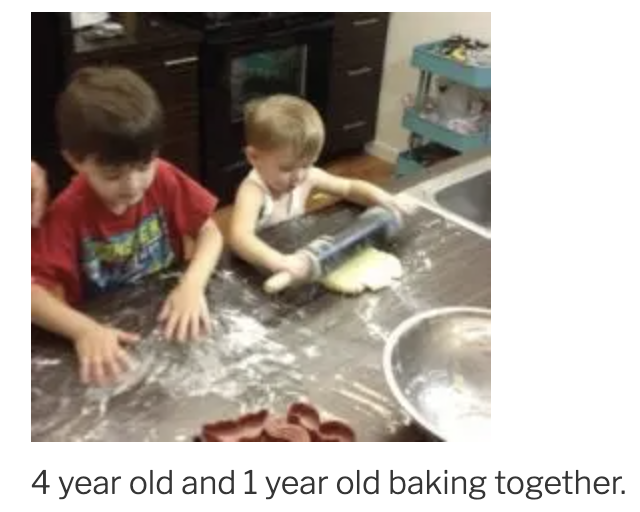
Ask yourself, “What is a “good job” anyway?” It’s akin to saying something is “nice” — which is vague and often insincere sounding. In this group of children a subset also seems to exist. This group of children are performers. Their actions require an adult audience at all times and are aimed at making adults smile, laugh, take notice and praise them. These children seem to dance around and yell “look at me, validate me”. Children are natural, open givers and when adults in their lives praise boisterous, goofy and often clown like behavior, they tend to think all environments are a stage on which they have to perform.
These first children are products of well meaning adults who want to celebrate their child’s accomplishments, want to be supportive or encouraging and believe that the best way to do so is by lavishing praise on any and all efforts regardless of their magnitude. In contrast there is a second group comprised of children who seem to linger, unable to take steps towards any independence, even basic tasks of which they would be successful. This second group of children are those neurotypical children who won’t attempt to put on their own shoes even if it means going somewhere they enjoy, who will sit down and cry the moment they are left to their own devices, or who refuse to care for their own basic needs eg: will refuse to eat unless someone else feeds them. These children are in stark contrast to Montessori’s vision of the first plane child whose voice calls “help me to help myself”. Montessorians refer to these children as “adult dependent” for they depend on an adult to act for them. I believe this term needs to be retooled, and the focus should be on the dependence the adult has on the child remaining needy. Human development theories and Montessori’s own theory support that healthy, neurotypical children have a drive to develop towards greater levels of independence — this is a biological imperative for most living creatures. Montessori wrote about children having deviations from this path, and almost always these are initiated by the adult — whether directly through actions towards the child or indirectly through the curation of the environment the child is a part of. “Never help a child with a task at which he feels he can succeed.” (Words of Wisdom 1990, edited by William Safire and Leonard Safir, p. 58).
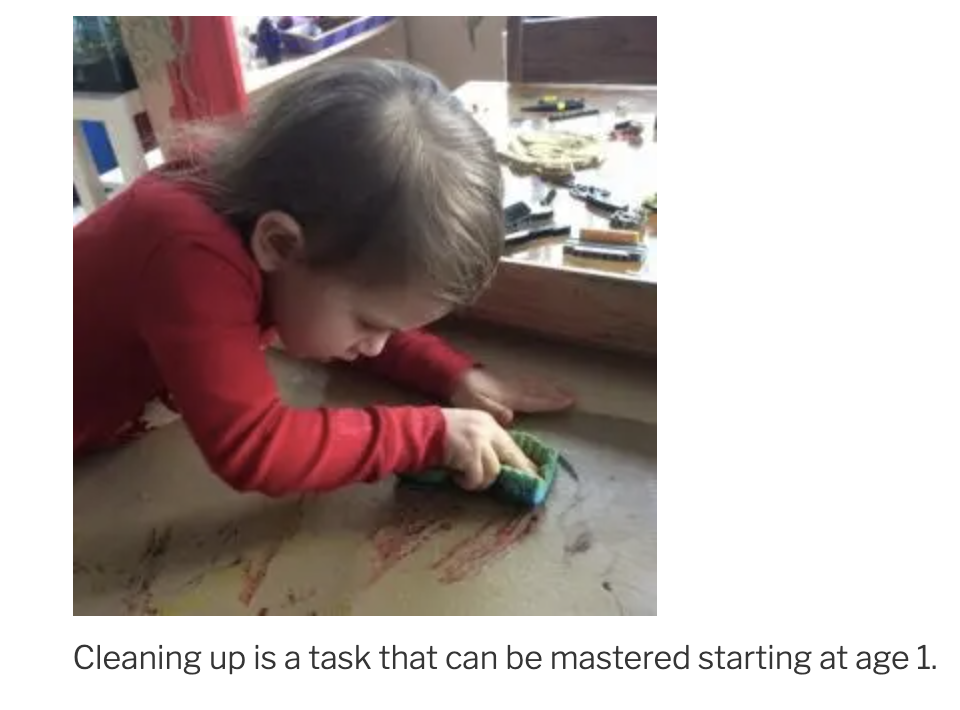
So let’s travel back to children who have dependent adults in their life. These adults seem to depend on their child remainingdependent on them, which does not serve a child’s overall development. “Freedom without organization of work would be useless. The child left free without means of work would go to waste, just as a new-born baby, if left free without nourishment, would die of starvation.The organization of the work, therefore, is the cornerstone of this new structure of goodness [in education], but even that organization would be in vain without the liberty to make use of it.”(Dr. Montessori’s Own Handbook: A short guide to her ideas and materials 1914, Schocken Books, Inc.” New York, p. 94) Why would an adult be dependent on a child staying dependent? The reasons are varied There can be a sense of accomplishment and joy at having consoled an upset child. Most with children have felt it at one time or another, that “Aha! I figured out how to calm you down, I am doing a good job!” Perhaps it is a lack of knowledge about the child’s own capabilities, or a belief that the adult is needed to keep the child from experiencing failure or struggle. Maybe it is a held belief that to do for someone is to show care, and therefore the child should not have to do for themselves or perhaps the adult, once a child, did not feel supported and therefore wants to provide more support than they received.
How does an adult’s dependency appear? It can be witnessed in the adult’s own hesitancy to allow a child to move into a space and acknowledge they will be ok. These adults hang on at drop off after their child has clearly entered the classroom, has begun readying themselves for their day and instead of also moving on with their day choose to call their child, breaking the concentration of effort, reiterating that they will return even though the child has not questioned this fact. There is some need on the adult’s part to reaffirm that the child needs them, will miss them. Often times after the adult makes an ordeal about leaving the child (who originally felt secure and safe) becomes stressed, cries, and becomes clingy. It is the adult’s own actions that have caused this deviation from quiet, calm and concentrated effort so one could question what the adult receives from this interaction. Validation. “One who has drunk at the fountain of spiritual happiness says good-by of his own accord to the satisfactions that come from a higher professional status … What is the greatest sign of success for a teacher thus transformed? It is to be able to say, “The children are now working as if I did not exist.” (Montessori, The Absorbent Mind,. p283)
For adults validation should come from the child no longer needing them yet the adult may seek validation as a parent, as an educator, as a person who is needed, an individual who is loved by another and many other reasons. All adults are at risk for seeking extrinsic validation from children. Today’s adults were yesterday’s children. To break this cycle and be fully self realized individuals, helping to create a world of independent individuals, we need to be aware of our own motivations in regards to children. Helping a child to put on their shoes because of a belief that they require help, the misconception that they should never experience failure, because they whine/demand or because it just makes the adult feel good to be useful -does not ultimately serve the best interests of the child. We are all raising our children for the rest of the world. Our children are not just our own. They will join the larger community outside of the family, and eventually join the world. We should strive to provide the world with individuals who know their own capabilities and skills, who know their own value and who are free from the entitled belief that others exist to serve their needs.
If it takes a village to raise a child we must remember that each child will someday become a part of a larger community and it is the adult’s duty to prepare them to be a healthy, contributing member.
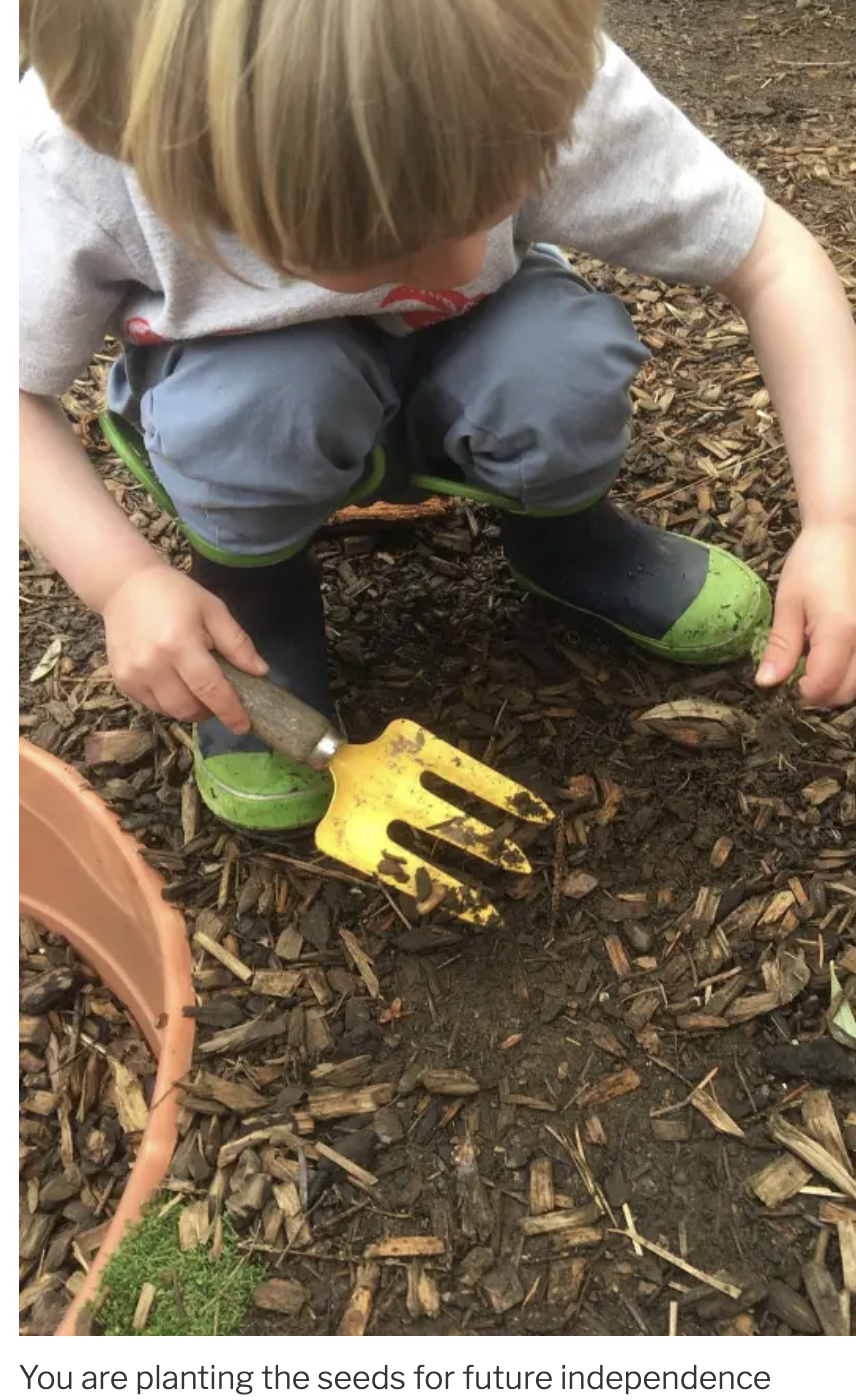
Letting Go with Love: Supporting Children Through New Beginnings
Being a parent is a rollercoaster ride full of learning how…
Being a parent is a rollercoaster ride full of learning how to deal with the seemingly illogical emotions of a not yet fully formed brain smushed into the form of small human you adore. Many times you will be able to circumnavigate breakdowns and difficulties but if you are a working parent who needs to leave the home and place your child in the care of another, here are some things to keep in mind.
Once you have found a nursery, preschool, center, or caregiver that is licensed, trained and trusted the most difficult part looms before you, the first day. As an adult you must acknowledge this stepping stone towards independence for your child and reflect on your contribution towards making this transition from the known family home life to a communal life a smooth one. Your efforts to stay calm, to trust your child and their environment will plant the seeds of independence which will sow your child’s self-esteem.
The most important part of the first day happens the night before, maybe even a few nights before, the first day. Making sure that you are telling your child some short, true stories about school can help them acclimate to a new environment. Include details about how your drop off will go eg: “Mommy will drop you off at the front door and give you a kiss and hug. Your guide will great you and shake your hand (you can practice this at home). You will go inside, an adult will help you find your cubby and put away your things, then you will wash your hands. Daddy will pick you up after lunch.” These small facts are second nature to us, but for a child life is in the details and they want to know what will happen.
The night before the first day make sure everyone is well rested, let your child pick out their clothes and place them in a location where they can be easily accessed in the morning by your child. Self-dressing is a big component of self-care. Choosing their own outfit is empowering! As classroom guides we are delighted to know a child has chosen and put on their own clothes — even when the socks don’t match and the shirt is inside out.
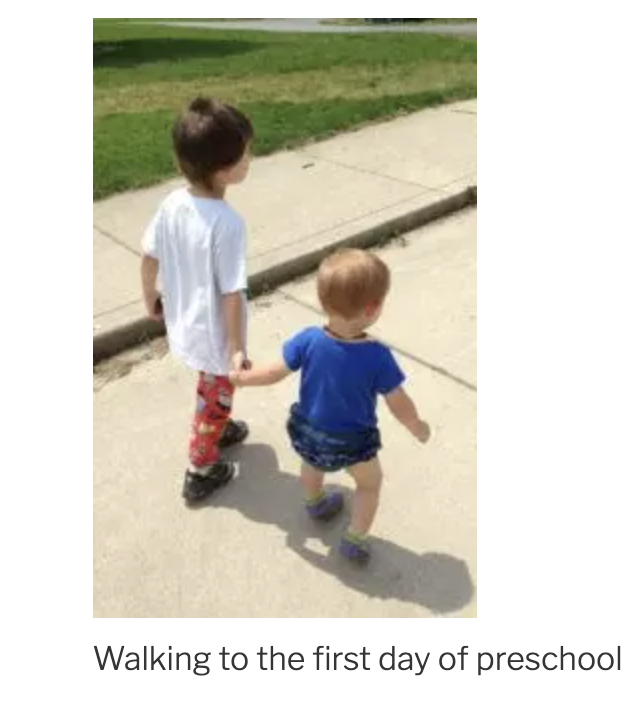
New Beginnings
If your child is not arriving for early care, a nutritious breakfast helps set the stage for a level-energy day. And of course the most important part…time. Give yourself extra time to get to school in the morning, to deal with any bumps that may occur on the first day, and so that you can be relaxed about the experience. Children model what they experience in their environment and often internalize adult emotions. A relaxed and confident parent can make a world of difference to a child. But even the best preparation sometimes ends in tears. Separation anxiety is normal, crying is normal and as adults we can validate a child’s emotions and feelings without allowing them to become crippled by them.
If your child cries continue to be confident in your drop off routine. Reiterate what will happen “Do you remember our story? This is when I give you a big hug and kiss. Daddy will pick you up after lunch” and allow one of the adults to help your child transition into the environment. If you feel your child needs more time to transition, you may opt step to the side of the doorway, sit down with your child and relax a moment. Take a breath because this is only the beginning of a lifetime of letting go.
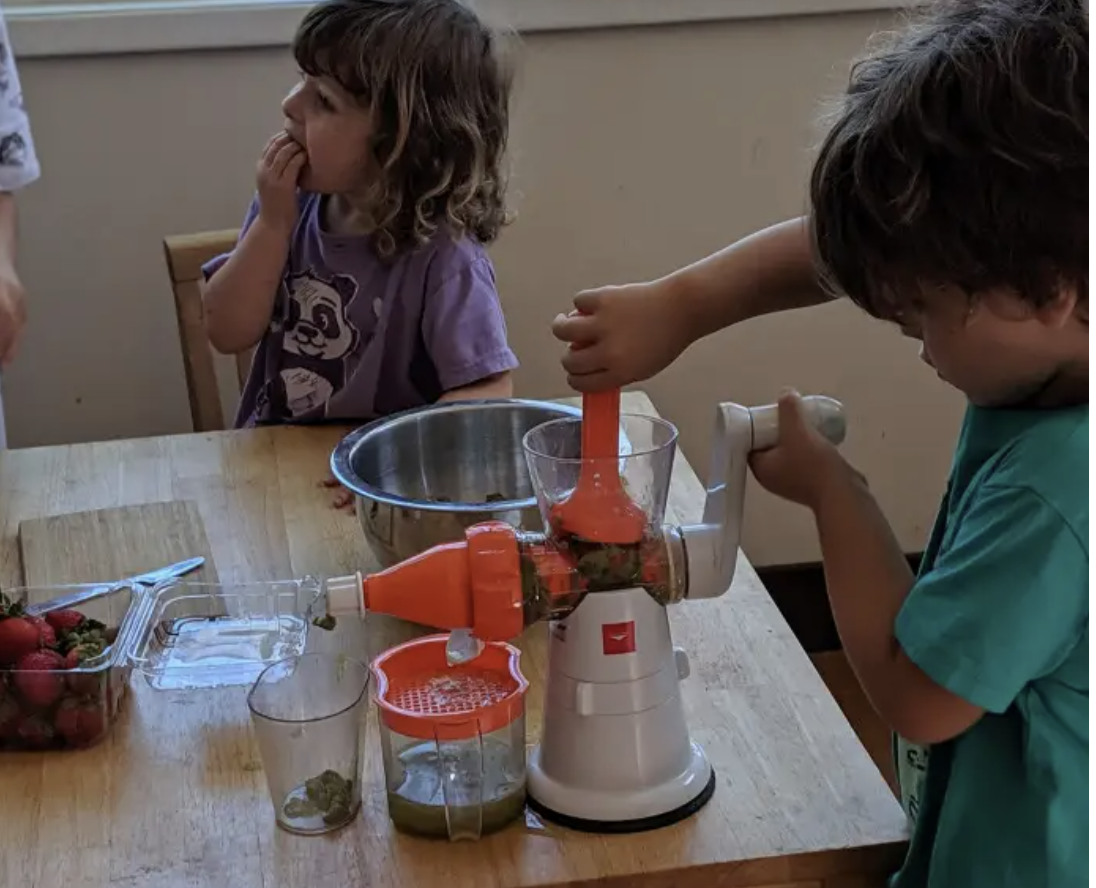
Rethinking Discipline: Freedom, Independence, and the Whole Child
Discipline is then a preparation for living and making choices. It is a way to educate children and ourselves, a developmental potential guided by natural laws (for children in the first plane that can be the sensitive period for movement) that undergoes a process of learning.
“What is generally known as discipline in traditional schools is not activity, but immobility and silence. It is not discipline, but something which festers inside a child, arousing his rebellious feelings.” (Montessori, Creative Development in the Child Vol. 2, p.41.)
Real life experiences that allow children to explore with their senses is the basis of Montessori’s philosophy on education.
Freedom and discipline are naturally at odds in the conventional system of rearing or educating children, a child only obtains freedom from the adult after a show of discipline which usually involves immobility and silence. These two requirements of discipline are at their core in direct opposition to the child in the first plane (ages 0–6) and their sensitive period for movement (making a child immobilized is at obvious odds) and order (often times an adult imposes discipline upon a child with no rhyme or reason, no logic and seldom does the “punishment” fit the crime). Another consideration is the absorbent mind that has taken in snapshots of the environment, including the adult’s own “disciplined behavior” which seldom, if ever, involves immobility and silence imposed by others. Adults tend to discuss their “will” and “discipline”, their self-control as their own exertion over themselves, “Mommy isn’t having a piece of cake because she is dieting”.
A new interpretation, based on Montessori philosophy, of discipline and the resulting interpretation of freedom no longer juxtaposes them during conversation, instead they become intertwined and codependent with different denotations. Freedom becomes the internal knowledge, developed from experiences, that one can make choices and follow through on them. It is an internal state best summed up by the idea that even when the body is imprisoned by others, by ailments, we can still have a “mind that is free”, others cannot take away our thoughts, our feelings, or our emotions — we poses these and therefore freedom at its root can never be taken away from or granted to someone because it is a state of being.
Discipline is then a preparation for living and making choices. It is a way to educate children and ourselves, a developmental potential guided by natural laws (for children in the first plane that can be the sensitive period for movement) that undergoes a process of learning. The outer manifestation of discipline is an external window to these internal processes that are ongoing. To look at another system of discipline, or self-control, in meditation the practitioner first allows themselves movement through yoga, readying the body for long periods of immobility, and then they discipline the mind by becoming aware of their thoughts without becoming entrapped or attached to them. This discipline allows for freedom and the realization of atman, the “true self”, a realization of the cosmic connection, an attainment of Samadhi or bliss. It very closely parallels Montessori’s belief that spontaneous self-discipline is an outcome of normalization.
Within this discussion, freedom and discipline are regulated by liberty and limits. Liberty, when given in a complete and non-lacking way supports the development of both freedom and discipline. It is closely connected to choice and action, and has an implication of permission (eg: “How dare you take such a liberty!” meaning you were not given permission to act in that way). Limits are set with the goal to protect the environment and individuals, defined by the context of a situation and based on the capacity of the individual to understand them, act independently and adhere to their parameters; this makes them flexible and varied.
At the heart of all of these ideas is independence. As an individual’s independence increases the personal limitations to their freedom, their ability to make choices lessens, more opportunities exist. Just as the student who completes a degree has lessened the limits of their personal knowledge, the limits to the jobs they can attain are lessened. When they are given the liberty to apply to multiple jobs they are also now capable of the freedom to choose which job suits them best, which has better benefits, etc. The freedom to choose their job would not have been available to them if they had not independently sought out education and lessened their personal limitation of pertinent knowledge. It is that same freedom that allows them to think about the consequences of choosing one job over the other; less time at home versus more money, less time at home and the possibility of an unhappy marriage, etc.
This new interpretation of freedom and discipline seems straight forward at its roots. When Patrick Henry and others before him proclaimed, “Give me liberty or give me death” they were spot on. Liberty is something that can be granted, without it the ability to make a reasoned choice (freedom), the ability to control oneself and follow through on that choice (discipline) and even independence (the ability to act for oneself without reliance on others) is for naught. Without the complete and necessary granting of liberty to an individual, all of the internal self-development is a means to no end; the individual metaphorically dies and in the context of Montessori possibly deviates. An adult dealing with children must be fully aware of this paradigm for it is one very important facet of the prepared environment and helping children develop their executive functioning skills.
The Never-ending Work of Becoming a Parent: Why Growth Matters More Than Perfection
Many parents are familiar with the quote, “Please be patient, I’m a work in progress” as it relates to children, but seldom…
Many parents are familiar with the quote, “Please be patient, I’m a work in progress” as it relates to children, but seldom do we contemplate that adults are also a work in progress, especially as parents. Once you gaze into those bright eyes and caress those tiny fingers you have started down your own uncharted path as a parent and each day you learn something new about yourself, your child and your relationships. Parenting is an action that can never truly be mastered and requires the individual to recognize that they too are growing. That can be a scary realization, to know you may never have all of the answers, but it can also liberating. It means that each day you can start fresh and be better than the day before.
I have had the opportunity to attend two workshops; the first offered by mother, grandmother, veteran Montessori guide and administrator
Pat Luddick as she spoke on Montessori Parenting. The second was a class offered by the Oregon Center for Childcare entitled “Positive Behavior Intervention and Support: Module I”. While the two presentations sound as though they are vastly different, they did have a few common threads that form a basis for parenting or guiding the growth of children. When stripped of their lineages the end goal was helping children to use prosocial behaviors, take responsibility for their actions and have respect for themselves and others.
Two Different Presentations Boiled Down
Ms. Luddick premised her presentation with her “Building Blocks of Belonging.” These were Grace and Courtesy, Language, Work and Community which are achieved in partnership with the school and home. The PBIS module is a “systems approach which establishes the social culture and behavior supports needed for schools to be effective learning environments for all students.” While they sound like night and day, they are related. Both seek to provide children with consistency, routine, schedule and boundaries and both focus on the supportive role of positive and consistent adult behavior.
Learn What You Live
Montessori’s philosophy embraces the idea that children learn what they live — they literally become people of their time and place by absorbing information (through their senses) about their environment. Think of it in relation to children born in one country but raised exclusively in another (as in international adoption). They learn to speak the language of those around them, not of where they were born. They learn the customs, mannerisms and social behaviors of their environment. This is how all children learn and grow which is why it is important to give children the clearest, most positive aspects of our society.
The very manner in which children develop proves that the child has a need to belong to a community, this is a human tendency that Montessori discovered across space and time. Just think of all of the ways humans identify themselves; as fans of certain sports teams, as members of fraternal orders, as adherents of a specific faith (the possibilities are endless), by which particular individuals a person identified with from these groups (who we hold up and esteem). Ms. Luddick argues that the parent needs to be the inspiring leader.
The Parent As An Inspired Leader
What does it mean to be an inspired leader? My take away blends much of the two presentations together. First it means modeling Grace and Courtesy. Grace is how you carry yourself, what you believe about yourself and how you demonstrate that you value yourself. Courtesy is recognizing these value of others and treating them well (in Sanskrit this can be summed up with the word namaste). Children of a young age need consistent values across their spaces. For example: using please and thank you, using respectful communication, washing hands before meals and when coming indoors, taking shoes off at the door, communicating needs in an appropriate manner, table manners, and so on.
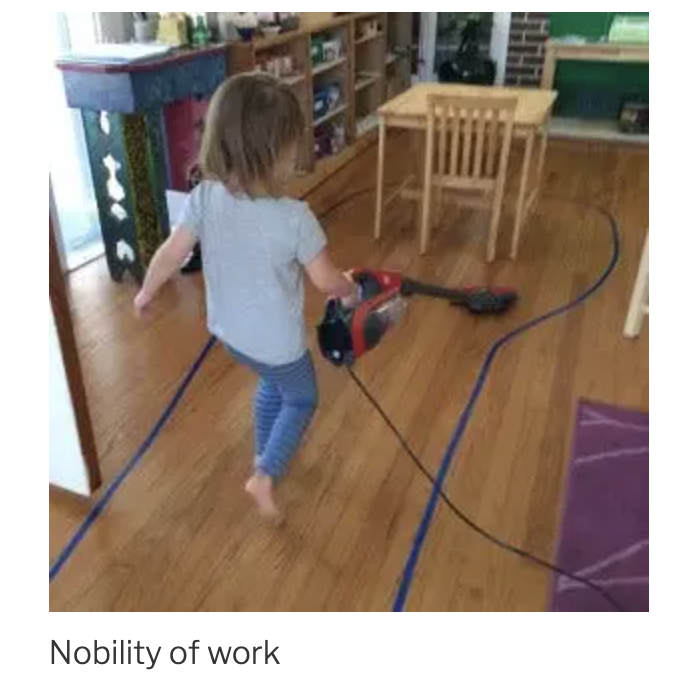
Nobility of work
The Power of Language
Right in line with Grace and Courtesy is the power of language. Parents and adults must adhere to using language appropriately and that does not just mean grammatically correct language. It means choosing our words with purpose and positive intention, thinking before we speak and using our words to raise our children up, not to cut them down. Inspire your child to be strong and share inspired stories of human achievement (familial stories of perseverance). The positives of your family should be center stage and let the rest go. Montessori education includes a heavy reliance on spoken language and telling true stories to children. Children love to hear about what is and what was, and even more, they enjoy knowing how it relates to themselves as they figure out their place in our world. What better way to engage these pre-literacy skills than with stories about them and their family?
This language extends to how we as adults perceive our worth (grace) and work. It means not whining as a parent, not complaining about work — instead instill the idea of the nobility of work. Work has value, it is important to our growth as individuals and our growth as a society. Freud posited that to feel complete, to feel successful, and individual needed love and work. Children are absorbent minds and internalize what they hear from adults — even about work. Think about when you or other adults come home from work, are you proud of the work you have done? Have you done your best job at work? Do you share those values with your child or are you sharing a different idea of what work is and what work means?
Finally the power of language relates to the nature of our talking. We need to communicate verbally but also non-verbally. We need to make sure as speakers that we are confident, decisive, short and sweet when we are communicating. Most of all, do not process out loud (don’t think out every scenario in front of your child or over explain). Remember that “no” is a perfectly acceptable response. You are the adult, you owe no explanation, don’t fear your child. Another speaker recently suggested that many kids who ask “why” are not actually looking for answers, they are looking for a way out of hearing “no”. This little word allows our children to build resilience in the face of disappointment and later on in life, failure. Life can be messy, the ability to carry on living when everything is not going your way is an important one. We need to nourish our children by giving them 100 percent of what they NEED and only 25 percent of what they WANT.
The Importance of Meaningful Work
Montessori termed the child’s engagement in her environment as “work” because she felt to call it anything else was demeaning. Through use of their own hands, their own experiences with real life materials the child is construction his/her very own being (the child makes the man). Work has all but disappeared from the child’s home life in many communities, routine chores, or small jobs have been replaced by scheduled extracurricular activities, homework, and electronic devices. In a world of distraction and “wants”, the needs of the child have been usurped by marketers. In an effort to provide the very best for our children we have been keeping them from what they truly need — work and responsibility. If we want to cultivate responsible adults and citizens we must give our children realistic responsibility at home and school. Caring for themselves, and carrying for their environment are two large components of Practical Life in the classroom, and should be in the home environment too. There is no reason that a child who can set a place at the table at school, fold linens at school, change their clothing at school, offer to serve tea at school — should not be able to do these things at home. The only hinderance is the adult and the adult’s perception of the child. The child craves belonging, they want to find their place in the community and be an active participant, providing opportunities for the child to be
washing the leaves of a plant
an active and positive member of the family household solidifies that child’s place, allows them to identify with the family and be a contributor, it relays the family’s values and the dignity of work, it teaches the child that the reward comes from the internal satisfaction of knowing you belong and that you contribute.
“Among the revelations the child has brought us, there is one of fundamental importance, the phenomenon of normalization through work. Thousands and thousands of experiences among children of every race enable us to state that this phenomenon is the most certain datum verified in psychology or education. It is certain that the child’s attitude towards work represents a vital instinct; for without work his personality cannot organize itself and deviates from the normal lines of its construction. Man builds himself through working. Nothing can take the place of work, neither physical well-being nor affection, and, on the other hand, deviations cannot be corrected by either punishment or example. Man builds himself through working, working with his hands, but using his hands as the instruments of his ego, the organ of his individual mind and will, which shapes its own existence face to face with its environment. The child’s instinct confirms the fact that work is an inherent tendency in human nature; it is the characteristic instinct of the human race.” (Dr. Maria Montessori, ‘The Secret of Childhood’, Orient Longman Limited, 195)
Family Vision
All great leaders have a plan. As the adult you need to have a vision for your family. What do you want your home environment to be like? (inviting and engaging to children or a museum of things that can not be touched?) What are you unwilling to compromise on? (Use of technology, bedtimes) Do you use family meetings to discuss what is going on in the home, what is and isn’t working and brainstorm solutions? What are your family rituals? (birthday parties, dinner time, etc).
This vision must include your role as an authoritative adult. Authoritative parents, Diana Baumrind explained, artfully combine qualities of responsiveness and demandingness. Responsiveness, or nurturance, refers to the warmth, love, understanding, and empathy that a parent offers a child and demandingness relates to expectations and boundaries, the limits and discipline that the adult offers in a fair and consistent way.
Luddick relays that these methods combine in a way to help nurture a child and adolescent who
knows his parents are there (trust)
looks up to his parents (respect)
follows their lead (obedience)
subscribes to their values (loyalty)
Positive Behavior Intervention Support How School Policy Can Help Parenting
Public schools come under scrutiny a great deal, every election there seems to be a new catch phrase program to help our children excel, however; these programs are often the result of policy makers and publishers who have financial interests as their main motivation. PBIS is a step in the right direction as it is evidence based and strives to define and teach positive social expectations. Although the method employed, which is a token system, is not something that Montessori schools embrace (this puts the emphasis on the external rewards of making the right choice instead of the internal reward), it is not without merit as a system employed by psychologists especially for use with children with special needs.
The system works by defining, teaching, reminding, celebrating, correcting student behavior in an ongoing loop (much like Montessori Grace and Courtesy practices). A problem behavior is noted, the teacher writes a lesson, names the lesson, presents the lesson and positive behavior (sadly here PBIS diverges by also demonstrating the negative behavior — which is proven to be an ineffective way to communicate with children) and reward the behavior when witnessed.
Again, It is About the Adults
The most pressing send home from the entire PBIS lecture was that it takes time and changes in adult behaviors to generate the desired outcome in children’s behaviors. Most child behavior results in “deficits” in skills — children have not been taught or do not know the appropriate ways to behave because they are no longer learning these things at home. The need for common language, common vision and common experience was put forth as a way to achieve these goals. It echoes Luddick’s own lecture and Montessori’s personal thoughts that the biggest hinderance to children’s development is adult prejudice and behavior.
Why is it important?
Why is it important that we create respectful, responsible individuals, or children who exhibit positive behaviors? Because positive behaviors are the prerequisites for academics and academic achievement. The role of the adult providing procedures and routines creates structure for the child. This structure (knowing what is expected) gives a sense of confidence and competence (the child can be successful), which leads to intrinsic motivation (that feeling of success is its own reward), which furthers independence/autonomy (confidence inspires more caring for the self) that builds to creativity and originality of thought (what else is there I am capable of), these lead to social responsibility (how else can I be productive) and overall spiritual awareness (I am connected to the human race).
Further Help
How to Raise An Adult, Julie Lythcott-Haims (about the overparenting epidemic)
The Road to Character, David Brooks
Understanding the Human Being, Silvana Quattrocchi Montanaro, MD
Parenting with Dignity, Mac Bledsoe
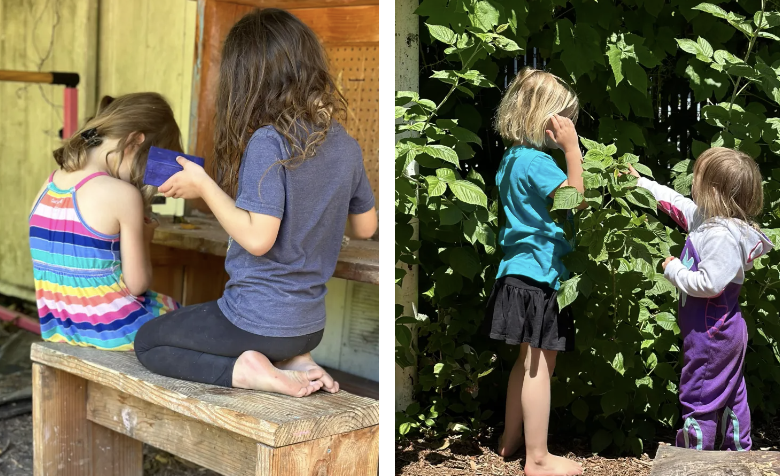
Building Buddies: How to Help Your Child Make Friends (Ages 4-6)
Friendships are the building blocks…
Friendships are the building blocks of a happy childhood. They provide children with a sense of belonging, security, and joy. But for young children, navigating the social world can be tricky. Here are some tips to help your 4- to 6-year-old blossom into a friendship pro:
Playdates: Organize playdates with classmates or neighborhood kids. This is a safe and relaxed environment for children to bond over shared toys and activities.
Park Power: Parks are bustling social hubs for children. Encourage your child to approach other kids with a simple “Hi” or “Can I play with you?”
Common Ground: Help your child identify their interests and seek out activities or groups that cater to those interests. This is a great way to meet like-minded peers.
Social Skills 101: Role-play with your child on how to greet others, share toys, and take turns. Social skills are learned, not innate, and practice makes perfect!
Be a Buddy Yourself: Model positive social behavior by being friendly to others and striking up conversations. Your child will learn by your example.
Remember, friendships take time and nurturing. Be patient, celebrate small victories, and most importantly, have fun!
The Lost Art of Boredom: How Screens are Robbing Children of Creativity
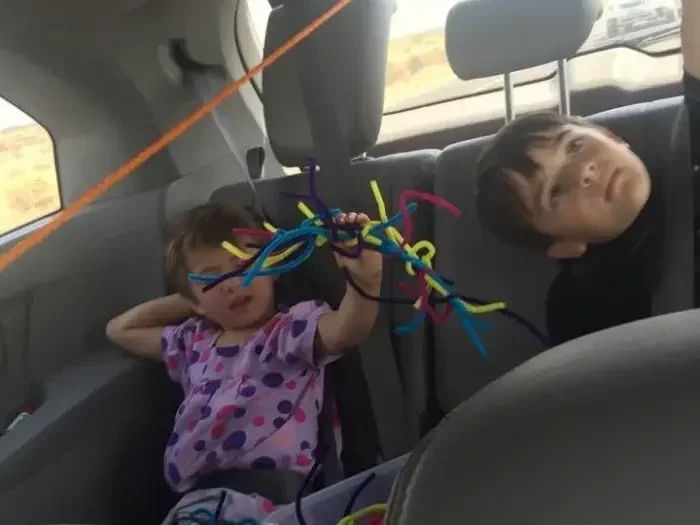
Before the backseat was filled with handheld gaming devices, pads, and pods, how did children spend their time in the car?
Give a thought to your childhood, assuming you are old enough to have spent a childhood free from screen time (yes, that was a thing).
My childhood, outside of the car, was spent exploring the neighborhood with kids from across the street. All of us endowed with terrible nicknames such as Freckled Faced Annie and Big Fat Jo, I even hesitate to type them; we did persevere into adulthood despite the occasional ill will of others. However, that did not stop me from having misadventures with a variety of children, including my sibling and his friends, from time to time. We walked to the parks, we walked to school without parents, we walked to the town center — sometimes we walked all the way from our home on Sommer Ave in Maplewood, to the center of downtown South Orange to find better ice cream than the chain offered and purchase board stickers for no real reason (none of us owned a board — we must have liked the graphics). Were the mid to late 80’s that much different for a child than today? Absolutely.
A 14-hour car ride, no screens, just pipe cleaners, yarn, stickers, crayons, and paper.
First of all I don’t believe parents cared as much if children were “bored”, a term I use loosely because the problem is actually a lack of imagination, not boredom. Is it because parents of previous generations just didn’t have the pressures of living up to or the distractions of living on Pinterest, Facebook, and Instagram? Did they just have experiences in their childhood of more authoritarian models? Without writing a long dissertation on what caused the shift in parenting across the generations, I can anecdotally discuss what has happened based on what I remember experiencing in relations with adults.
They didn’t attempt to fill every moment of silence with an afterschool activity or electronic device — they left us to our own devices, we were termed latchkey kids.
What else filled my time?
Playing with model horses (open ended toys), reading, printing my own magazines (I received a small rubber stamp press in kindergarten), copying the dictionary (yes, I did just share that with the world, and it was my father’s answer to “I have nothing to do”), cooking, horseback riding, pretending to be zoo keepers with my sibling (we’d take turns being a cougar, the game was literally called “coo-gie”), pretending to be royalty (we would drag each other around on a large crocheted afghan early Saturday morning and the “King or Queen”, as the game was aptly named, would demand to be made breakfast or to travel to different places) and once in a while we would watch a television show with our parents, our house favorite was Fraggle Rock.
I assume the choice of the show had something to do with the fact that my father was an engineer at the time, and the whole show was maybe 30 minutes at the most and aired on a premium cable channel, so there were no commercials.
What did our car travel time look like?
There was always the initial barrage of “Are we there yet?”
which would inevitably lead to a discussion of how many Fraggles it would take (this was our measurement of time as young children). We knew we were in for the long haul if it was anything over two Fraggles (possibly Pennsylvania for antiquing — yes, we started at a very young age and were well behaved because it was expected), if it was a half a Fraggle, we could guess where we would be going fairly quickly and accurately, since 15 minutes did not get you very far.
Those longer times were filled with an amazing array of games, many of which we invented on our own, some of which amounted to nothing more than counting as many red cars as we could. My favorite was “chef”. We pretended the ceiling and doors of the car had cabinets filled with endless food supplies, and we would take turns ordering food and cooking it up as — yes, you guessed it, chefs.
There were family games too; such as singing 100 bottles of beer on the wall (and guess what, I grew up to be a teetotaler), singing along to oldies on the radio (lots of folk music, especially Peter, Paul and Mary), playing the license plate game, playing “Going to a picnic”, playing the starting/ending sound game with animals, etc.
We didn’t have any kind of devices, and come to think of it, we were not given loads of “car things” to do either — such as crayons, coloring books, travel board games (we did have one small magnetic chess set, but the pieces always got lost).
Sometimes I took a book with me (which sadly at times got left behind in a hotel room, and then I had to deal with the responsibility of speaking to the librarian; my sibling sometimes brought baseball cards to look at. When those were lost, he learned to be responsible for his own possessions (though he never did get the hang of finding his shoes that were under his bed in the morning).
There were not copious amounts of food or drink in the car (did cars even have drink holders every six inches?), we stopped at rest areas or diners and ate like a family — squashed in a semi-sticky booth or on an ant-infested picnic table.
Does any of this matter?
Yes, because the answer to “we’re bored” or “why aren’t we there now” was never an idevice. It was “play a game with each other,” which really meant, “invent your own fun.”
This is something today’s child is growing less capable of doing, sometimes every single day. Truly pause for a moment and think about the ramifications of a child who cannot invent their own fun, or even sit in silence for 5 minutes (let alone 15). What do you think that child’s future looks like? Can’t imagine that far? Think about what kindergarten in our current education model will be like for a child who needs to be constantly distracted, because that is truly what we are talking about.
Children are experiencing ongoing distraction from being present in the moment. They no longer have the privilege of feeling as though there is nothing to do and then being able to construct something themselves. They lack motivation (devices are given to them at a young age, and I stress given) to use their own minds and even the ability to use their own minds to construct alternative scenarios, games, and interactions. We tout that we want children to become innovators, but the majority of the time, we are not giving them the childhood experiences that will allow them to do so.
I have worked with children for the last 20 years in a variety of capacities, I can attest to this truth. We are ruining childhood for children. What used to be solely about over-scheduling with academic after-school classes and loads of extracurricular activities has now shifted to the deceptively easier and cheaper to manage handheld devices we call pads or pods, and this includes screen time at home that is thought to be “family bonding”.
No longer do parents have to rush children to and fro, or pay for classes — they shove a device in a child’s hand and let them “learn”. The problem is they aren’t learning by doing, and worse yet, they are learning less and less about human communication and contact.
But what about those children who still attend swim lessons or karate?
Adults who are obsessively tied to their handhelds are also part of the problem. Really pause and look around the room next time you are at the pool, the children’s museum or the park. Count how many parents are actively engaged with their child or even engaged with another adult in conversation. It is few and far between, and I know because I did just this while researching the topic of my AMI theory paper on parental engagement.
What do you think of when you see a young child of two or three years, screaming and lamenting that a parent has left the room — that the child is having separation anxiety, misses the parent?
Not these days.
I watched as a child melted down because a parent left the room, briefly, without their phone. Let that truly sink in. The problem was not the missing parent; it was that the phone was forgotten. The young child was trying desperately and earnestly to reunite the parent and phone, which decries the problem — young children have been taught, and rightly believe, that these things are highly important to us. That is the message they take in every day. Sure, they are convenient, and for some, they really can be a tool for work, but the average adult is just distracting themselves from the present moment, too.
What are we losing?
We are losing interactions with the world that have value developmentally. What used to be a time filled with conversations, movement, singing, reading, self-created entertainment, or even simple silence, has now been replaced by sedentary, often isolated, predefined entertainment that usurps the creative process and robs children of the keys to neurological development.
“Because I Love You”: When Love and Control Get Confused in Parenting
As parents, we all want the same thing: for our children to feel loved, safe, and confident in who they are.
As parents, we all want the same thing: for our children to feel loved, safe, and confident in who they are. But sometimes, in our well-meaning efforts to protect or support them, we may unintentionally confuse love with control, or praise with pressure. The result? Kids who struggle with anxiety, have a hard time separating from us, or seem stuck in earlier stages of development.
Let’s unpack some common (and research-backed) parenting pitfalls—and how we can shift toward practices that foster real security and self-trust.
1. Love Isn’t About Doing Everything for Them
It’s natural to want to make life easier for our children. Helping them get dressed, solve problems, or avoid discomfort can feel like acts of love. But doing everything for them can actually undermine their sense of capability.
Research on autonomy-supportive parenting shows that when children are given appropriate challenges and opportunities to solve problems, they build resilience, independence, and self-worth (Deci & Ryan, 2000).
Instead of thinking: “I need to do this for them,”
Try: “I’ll be here while they figure this out, so they know they’re safe even when things are hard.”
2. Affection Shouldn’t Be Conditional on Performance
Sometimes, we use love and attention to motivate behavior: “If you do this, we’ll go for a treat,” or “If you don’t listen, I’ll stop playing.” It may seem harmless, but it teaches kids that their access to connection depends on compliance.
This kind of conditional reinforcement can lead to:
Insecurity (“Am I lovable only when I’m good?”)
Anxiety around making mistakes
People-pleasing behavior instead of authentic self-expression
Unconditional positive regard—accepting children without strings attached—has been linked to better emotional regulation and self-esteem (Rogers, 1959; Assor et al., 2004).
3. Praise Can Be a Trap If It’s Overdone or Misused
Many parents praise constantly to boost confidence: “You’re the best! That was perfect! You’re my favorite little helper!” While this sounds encouraging, overly global or exaggerated praise can have unintended effects:
Children may become dependent on external validation
They may fear failure and avoid challenges
Or they may feel pressure to perform a role (the smart one, the helper, the “special” one)
Instead of praising traits, focus on effort and specific actions:
“I saw how carefully you tried that puzzle. You stuck with it!”
This builds intrinsic motivation, which lasts far longer than gold stars or big reactions.
4. Kids Need Boundaries—Even When They Resist Them
Children thrive on consistency and clear expectations. It can be tempting to avoid conflict by negotiating or offering constant “special” incentives, but this often backfires. If everything is the “most fun,” or the “most special,” children:
Lose their ability to tolerate ordinary life
Expect novelty or reward for every task
Become emotionally dysregulated when things are boring or difficult
Boundaries don’t mean being rigid or cold. They mean teaching kids:
“You are safe. I am calm. I can handle your feelings, and you can, too.”
5. Parents Have Emotional Needs Too—but Kids Can’t Fill Them
Many of us come to parenting with our own emotional wounds—loneliness, past rejection, or the desire to do it “better” than what we had. Sometimes, without realizing it, those needs seep into how we relate to our children.
If we rely on our kids for comfort, affection, or emotional fulfillment, they may learn to prioritize our feelings over their own, becoming anxious, overly compliant, or even regressing to younger behaviors to stay close to us.
It’s okay to need support. That support should come from peers, partners, or professionals—not our children.
Final Thoughts: Connection, Not Control
Our role as parents isn’t to script our children’s identities or protect them from every stumble. It’s to create a space where they can grow into themselves—confident, resilient, and deeply rooted in the knowledge that they are loved as they are, not for what they do.
If you’re noticing persistent anxiety, regression, or power struggles in your home, you’re not alone. These aren’t signs of failure—just signals that something in the dynamic needs attention. Gentle, reflective shifts in our language, expectations, and emotional presence can make a profound difference.
Need more support? Consider reaching out to a parent coach, family therapist, or child development specialist. There’s no shame in learning new tools—just strength in showing up for your child and yourself with intention.