We are Raising our Children for the Rest of the World
Over the years I have become a very vocal advocate for the independence of children. I believe, within reason, they should be allowed independence to care for themselves (feeding, dressing, cleaning), their environment and others. This is not to say that they have the life experience or abstract reasoning to tackle every single issue that arises; crossing the street is something that needs to be taught and can’t be learned by mere trial and error. There are, though, other instances in life where
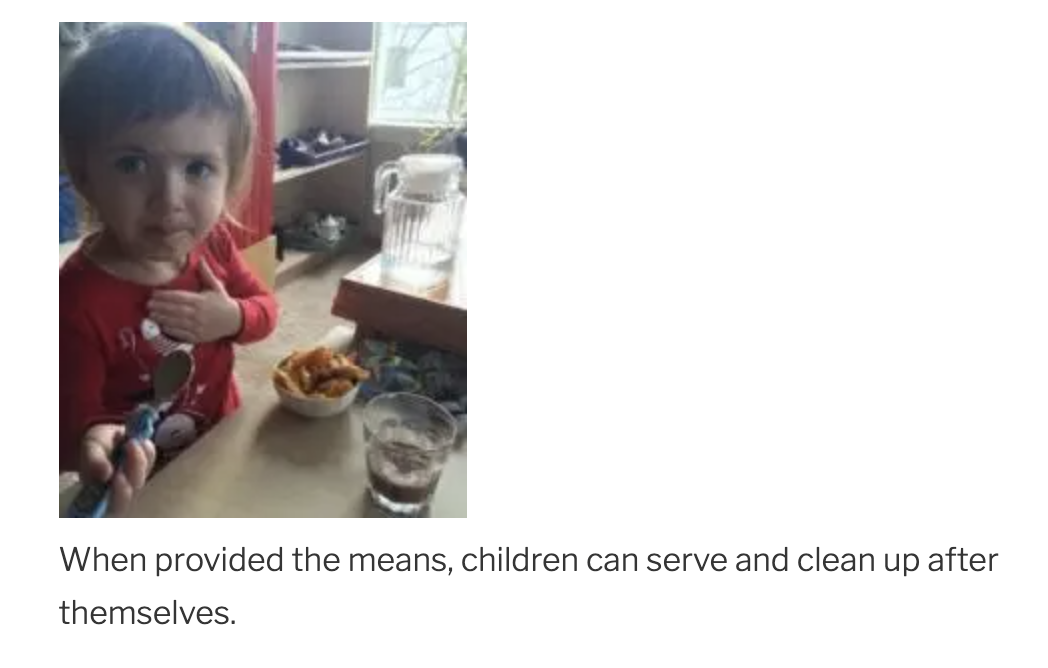
I have been a teacher in one form or another for more than half of my life, and now prefer the title that Montessorians use, guide (Montessorians also use directress). To quibble over words and titles may seem trivial, but at their core, these words are different. A teacher is one who teaches — meaning the action comes from the individual as they impart knowledge to another. This makes the recipient passive as they are the one being taught and creates a debt owed. Connotatively, it may bring up images of school children sitting sedately behind desks as a larger figure looms at the front of the room, scrawling on a chalkboard or lecturing. A directress, on the other hand, is one in charge of directing an organization; in this case, the organization can be seen as the classroom environment. A director/ess can be thought of as a person who governs the overall flow that a group experiences. The late Latin origin of the word can also be “to guide.” Which brings me to my preferred term, guide.
An adult in a Montessori classroom is a guide, a person who leads others to and through unknown travels, towards wisdom and knowledge, but does not experience this knowledge for them, does not require or allow the participant to take a passive role in this adventure. A guide encourages and invites exploration during a shared adventure, imparts their own learned wisdom and hopes that the participant can create meaning from it through their own experiences. “If education is always to be conceived along the same antiquated lines of a mere transmission of knowledge, there is little to be hoped from it in the bettering of man’s future. (Montessori, The Absorbent Mind, The Child’s Part in World Reconstruction, p. 4)
Experiences are an important and huge part of development and winning independence for human beings. I speak daily about allowing children to do for themselves so that they can know themselves as capable, can build self-esteem and self-worth. “If teaching is to be effective with young children, it must assist them to advance on the way to independence. We must help them to learn how to walk without assistance, to run, to go up and down stairs, to pick up fallen objects, to dress and undress, to wash themselves, to express their needs in a way that is clearly understood, and to attempt to satisfy their desires through their own efforts”. (Montessori, The Discovery of the Child)
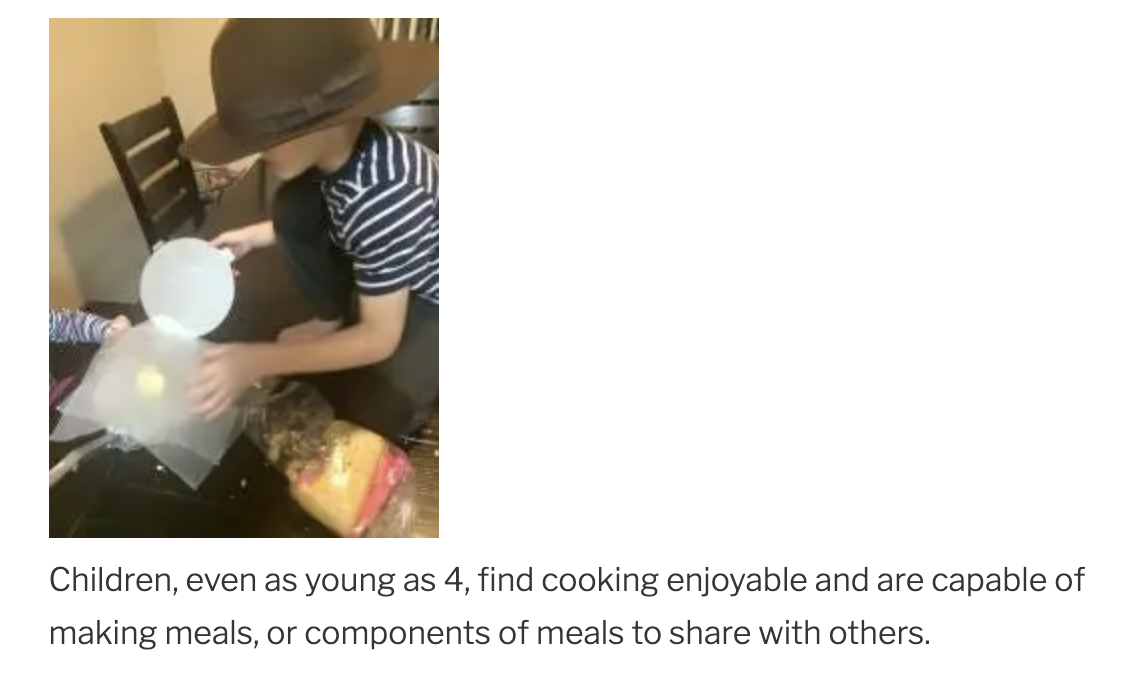
There is no way to force a child to learn to walk. Think about that for a moment. I have been a witness to three of my own children walking and they did it all on their own, those first steps were theirs to take, not mine. I didn’t hold their hands and attempt to force them into movements they weren’t ready to achieve because walking comes from a desire to expand movements, a readiness of muscles and the individual’s own efforts. I was excited, nervous and proud for them with an understanding that they owed me nothing, this milestone was theirs to accomplish. “For such a delicate mission great art is required to suggest the right moment and to limit intervention, last one should disturb or lead astray rather than help the soul which is coming to life and which will live by virtue of its own efforts.” (Montessori, The Discovery of the Child p141)
Walking isn’t the point of this post though, dependent adults are what I hope to discuss with parents and future parents. Montessorians like to discuss “adult dependency” a great deal in relation to children’s dependence on adults. I want to view this phrase as a misconception. Humans are hard wired for survival, and for growth so adult dependency does not make much sense for a neurotypical child. Where does this idea that they must be dependent come from? I think it is important to point out that there is a difference between children who seem unmotivated to work at difficult tasks because they fear failure and those who have dependent adults in their lives. The former prefer to say they can’t do things or things are not working when an activity gets difficult, they consistently ask for help or assistance over attempting to try for themselves and in general have no intrinsic motivation towards self-perfection. Many articles have been written about parenting styles, or more importantly adults’ use of praise and how it demotivates children, creates a stress cycle or shame over failure dynamic that makes a child retreat from challenges.
In Montessori we have a friendliness with error philosophy and don’t congratulate children on their accomplishments or deride them on their failures. This first group of children seem trapped, they want to be independent but they fear failure or disappointing their adults. Their validation has come from an external source, sometimes so frequently that the child may question if anything is truly a good job. They depend on validation that may not come if they are unable to be successful so they simply do not try. For these children we often suggest their adults focus on the process, not the product eg: “I see you worked for a long time to put on your shirt” or focus on the child’s own validation, “It feels good to take care of yourself, doesn’t it.” Both of these statements allow the child to take ownership of their actions and present the child with more concrete language and understanding.
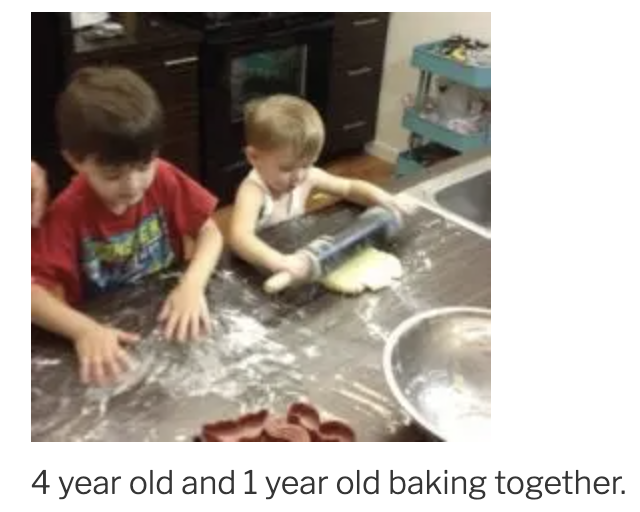
Ask yourself, “What is a “good job” anyway?” It’s akin to saying something is “nice” — which is vague and often insincere sounding. In this group of children a subset also seems to exist. This group of children are performers. Their actions require an adult audience at all times and are aimed at making adults smile, laugh, take notice and praise them. These children seem to dance around and yell “look at me, validate me”. Children are natural, open givers and when adults in their lives praise boisterous, goofy and often clown like behavior, they tend to think all environments are a stage on which they have to perform.
These first children are products of well meaning adults who want to celebrate their child’s accomplishments, want to be supportive or encouraging and believe that the best way to do so is by lavishing praise on any and all efforts regardless of their magnitude. In contrast there is a second group comprised of children who seem to linger, unable to take steps towards any independence, even basic tasks of which they would be successful. This second group of children are those neurotypical children who won’t attempt to put on their own shoes even if it means going somewhere they enjoy, who will sit down and cry the moment they are left to their own devices, or who refuse to care for their own basic needs eg: will refuse to eat unless someone else feeds them. These children are in stark contrast to Montessori’s vision of the first plane child whose voice calls “help me to help myself”. Montessorians refer to these children as “adult dependent” for they depend on an adult to act for them. I believe this term needs to be retooled, and the focus should be on the dependence the adult has on the child remaining needy. Human development theories and Montessori’s own theory support that healthy, neurotypical children have a drive to develop towards greater levels of independence — this is a biological imperative for most living creatures. Montessori wrote about children having deviations from this path, and almost always these are initiated by the adult — whether directly through actions towards the child or indirectly through the curation of the environment the child is a part of. “Never help a child with a task at which he feels he can succeed.” (Words of Wisdom 1990, edited by William Safire and Leonard Safir, p. 58).
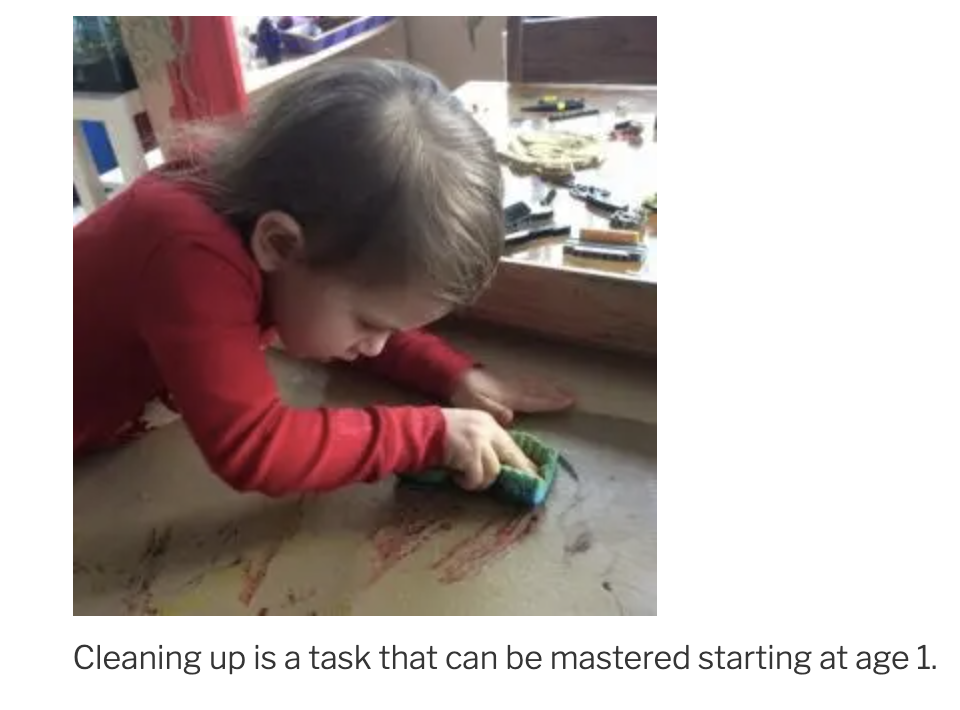
So let’s travel back to children who have dependent adults in their life. These adults seem to depend on their child remainingdependent on them, which does not serve a child’s overall development. “Freedom without organization of work would be useless. The child left free without means of work would go to waste, just as a new-born baby, if left free without nourishment, would die of starvation.The organization of the work, therefore, is the cornerstone of this new structure of goodness [in education], but even that organization would be in vain without the liberty to make use of it.”(Dr. Montessori’s Own Handbook: A short guide to her ideas and materials 1914, Schocken Books, Inc.” New York, p. 94) Why would an adult be dependent on a child staying dependent? The reasons are varied There can be a sense of accomplishment and joy at having consoled an upset child. Most with children have felt it at one time or another, that “Aha! I figured out how to calm you down, I am doing a good job!” Perhaps it is a lack of knowledge about the child’s own capabilities, or a belief that the adult is needed to keep the child from experiencing failure or struggle. Maybe it is a held belief that to do for someone is to show care, and therefore the child should not have to do for themselves or perhaps the adult, once a child, did not feel supported and therefore wants to provide more support than they received.
How does an adult’s dependency appear? It can be witnessed in the adult’s own hesitancy to allow a child to move into a space and acknowledge they will be ok. These adults hang on at drop off after their child has clearly entered the classroom, has begun readying themselves for their day and instead of also moving on with their day choose to call their child, breaking the concentration of effort, reiterating that they will return even though the child has not questioned this fact. There is some need on the adult’s part to reaffirm that the child needs them, will miss them. Often times after the adult makes an ordeal about leaving the child (who originally felt secure and safe) becomes stressed, cries, and becomes clingy. It is the adult’s own actions that have caused this deviation from quiet, calm and concentrated effort so one could question what the adult receives from this interaction. Validation. “One who has drunk at the fountain of spiritual happiness says good-by of his own accord to the satisfactions that come from a higher professional status … What is the greatest sign of success for a teacher thus transformed? It is to be able to say, “The children are now working as if I did not exist.” (Montessori, The Absorbent Mind,. p283)
For adults validation should come from the child no longer needing them yet the adult may seek validation as a parent, as an educator, as a person who is needed, an individual who is loved by another and many other reasons. All adults are at risk for seeking extrinsic validation from children. Today’s adults were yesterday’s children. To break this cycle and be fully self realized individuals, helping to create a world of independent individuals, we need to be aware of our own motivations in regards to children. Helping a child to put on their shoes because of a belief that they require help, the misconception that they should never experience failure, because they whine/demand or because it just makes the adult feel good to be useful -does not ultimately serve the best interests of the child. We are all raising our children for the rest of the world. Our children are not just our own. They will join the larger community outside of the family, and eventually join the world. We should strive to provide the world with individuals who know their own capabilities and skills, who know their own value and who are free from the entitled belief that others exist to serve their needs.
If it takes a village to raise a child we must remember that each child will someday become a part of a larger community and it is the adult’s duty to prepare them to be a healthy, contributing member.